
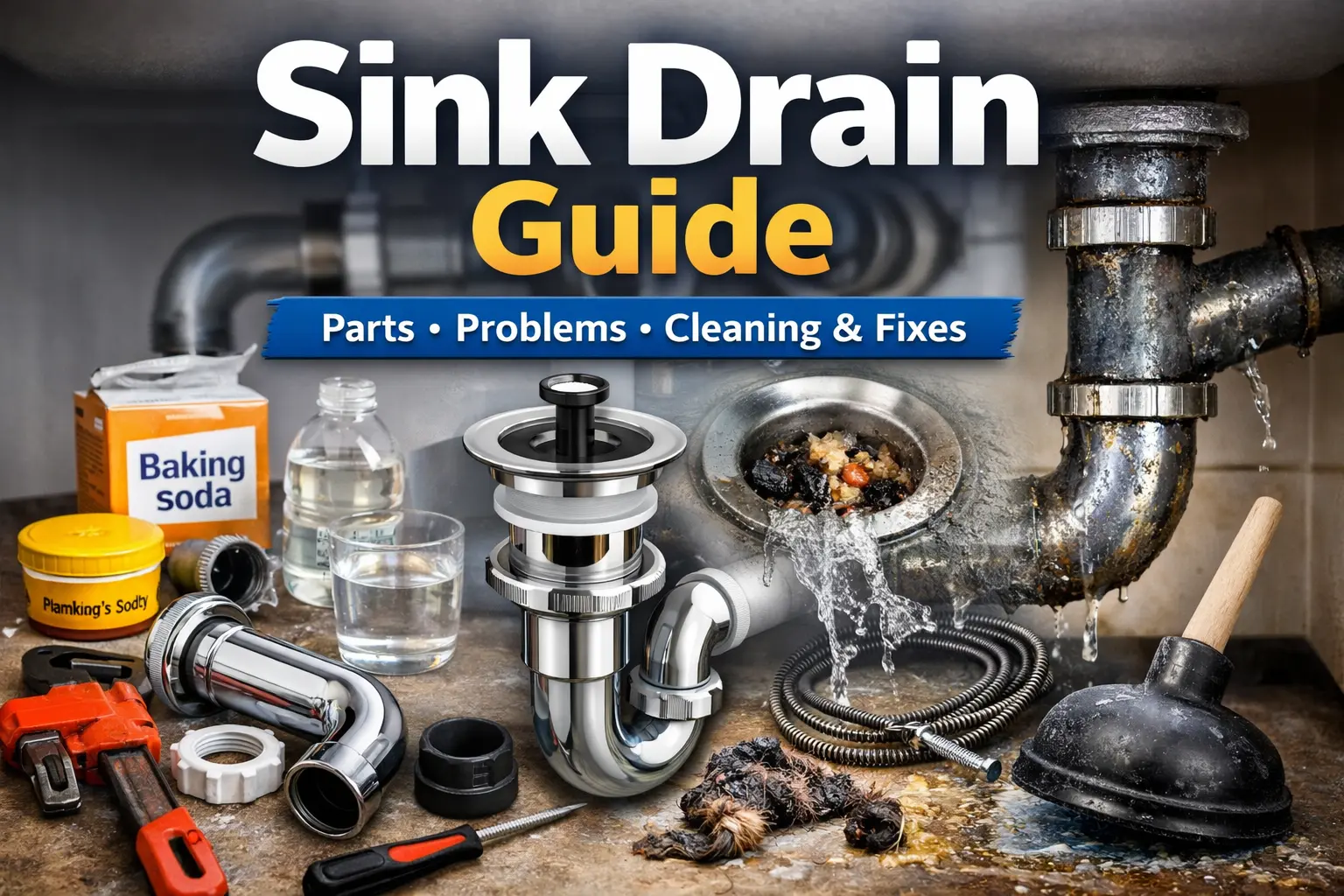
Sink Drain Guide Parts, Problems, Cleaning, and Fixes
A sink drain is the part of your sink that carries dirty water out of the basin and into the plumbing system. It looks simple, but it does a big job. When a sink drain works well, water flows fast, bad smells stay away, and leaks stay under control. In this guide, you will learn what a sink drain is, how its parts work, why problems happen, how to clean and unclog it, and when it makes sense to replace it instead of fixing it again.
Quick Summary
-
A sink drain moves wastewater from the sink to the pipe system below.
-
The main parts are the drain opening, stopper or strainer, tailpiece, and P-trap.
-
Most clogs come from grease, food, soap scum, hair, or small debris.
-
Start with the safest fixes first: hot water, stopper cleaning, trap check, and a drain snake.
-
Replace the sink drain if it is cracked, corroded, leaking often, or no longer seals well.
-
Call a plumber if water backs up again and again, leaks keep returning, or more than one drain is affected.
What Is a Sink Drain?
A sink drain is the path that water takes after it leaves the sink bowl. It starts at the opening in the sink and continues through the pipes below.
Think of it like a small road system. The sink is the parking lot. The drain opening is the exit gate. The pipes under the sink are the road that carries water away.
A good sink drain does three main jobs:
-
lets water leave the sink quickly
-
keeps sewer odors from coming back up
-
helps stop leaks under the sink
Kitchen sink drains and bathroom sink drains do the same basic job, but they deal with different kinds of mess. Kitchen drains often clog with grease and food scraps. Bathroom drains usually clog with hair, soap, and toothpaste.
Sink Drain Parts Explained
To fix a sink drain, it helps to know the main parts.
Drain opening
This is the hole at the bottom of the sink where water enters the drain system.
Drain flange or strainer
This is the visible metal or plastic ring at the top. In many kitchen sinks, it also acts as a basket strainer that catches food bits.
Stopper
Bathroom sinks often have a pop-up stopper. It opens and closes the drain so water can stay in the basin when needed.
Tailpiece
This is the straight pipe that hangs down from the drain opening.
P-trap
The P-trap is the curved pipe under the sink. It always holds a little water. That water acts like a seal and helps block bad sewer smells from coming back into the room.
Trap arm
This pipe connects the P-trap to the drain line in the wall.
Washers and slip-joint nuts
These small parts help hold the drain assembly together and keep it from leaking.
If you search for “sink drain parts explained” or “sink drain assembly parts,” this is the core system you need to understand.
Common Sink Drain Problems
Most sink drain problems fall into a few common groups.
1. Slow draining sink
If water leaves slowly, there is usually partial buildup somewhere in the drain path. In kitchens, grease is a common cause. In bathrooms, hair and soap scum are the usual problem.
2. Full clog
If water does not move at all, the blockage is likely thicker or deeper. Food scraps, grease, hair, and small objects can all cause this.
3. Sink drain smells bad
A bad smell often means trapped debris is rotting in the drain or stopper area. In some cases, the P-trap may be dry, dirty, or not working as it should.
4. Leak under the sink
A kitchen sink drain leaking under sink is often caused by a loose connection, worn washer, cracked pipe, or poor seal around the drain flange.
5. Gurgling sounds
A gurgling drain may point to trapped air, partial blockage, or a bigger drainage issue farther down the line.
6. Rust, corrosion, or repeated failure
Old metal drain parts can wear out. When this happens, cleaning may not solve the real problem. Replacement becomes the better choice.
How to Clean a Sink Drain Pipe
If the drain is not fully blocked, start with cleaning. This is often enough for light buildup and mild odors.
Step 1: Remove visible debris
Take out the stopper or basket strainer if you can. Pull out hair, soap slime, food bits, or other debris.
Step 2: Flush with hot water
Run hot water for a short time. This can help loosen light grease and soap buildup.
Step 3: Clean the stopper
A dirty stopper can hold a surprising amount of grime. Scrub it with dish soap and warm water.
Step 4: Use baking soda and vinegar carefully
Some people like using baking soda and vinegar for light freshening. It may help with mild odor and surface buildup, but it is not a magic fix for heavy clogs.
Step 5: Clean the P-trap if needed
Place a bucket under the sink. Unscrew the trap carefully. Remove the trapped debris, rinse the trap, and reattach it.
If you want to know how to clean sink drain pipe sections safely, this is one of the most useful DIY steps.
How to Unclog a Sink Drain Naturally
When the sink is draining slowly or not at all, move from simple fixes to stronger ones.
Step 1: Try hot water first
For minor grease or soap buildup, hot water may help break the clog enough to restore flow.
Step 2: Use a plunger
A small sink plunger can create pressure that loosens a blockage. Cover the overflow opening in a bathroom sink first so the plunger works better.
Step 3: Remove and clean the stopper
Many bathroom sink clogs sit right below the stopper. Hair wraps around the lower part and blocks water.
Step 4: Check the P-trap
If the sink still does not drain, the clog may be sitting inside the P-trap. Remove it and clean it out.
Step 5: Use a drain snake
A drain snake is often the best next step. Feed it into the drain and turn it gently. Pull it back slowly to remove hair or debris.
This method is one of the most practical answers to “how to unclog sink drain naturally” because it relies more on mechanical cleaning than harsh chemicals.
Step 6: Test the flow
Run water and see if the sink drains normally again.
If none of this works, the clog may be deeper in the line. That is when a plumber is the smarter option.
How to Replace a Sink Drain
Sometimes cleaning and tightening are not enough. If the sink drain is old, cracked, rusted, or leaking again and again, replacement is often the better fix.
Bathroom sink drain replacement is one of the most common DIY jobs because the assembly is small and easy to reach.
Signs you may need a new sink drain
-
the metal is corroded
-
the drain no longer seals well
-
the threads are damaged
-
leaks keep coming back
-
the stopper no longer works properly
Basic sink drain installation steps
-
Put a bucket under the sink.
-
Disconnect the P-trap and tailpiece as needed.
-
Remove the old drain assembly.
-
Clean the sink opening well.
-
Apply plumber’s putty or the seal recommended by the product maker.
-
Set the new drain in place.
-
Tighten the mounting hardware below the sink.
-
Reconnect the tailpiece and P-trap.
-
Test for leaks with running water.
The exact steps can vary by sink style, brand, and whether the sink uses a basket strainer, pop-up stopper, or other design. Always check the instructions that come with the new part.
When DIY Is Enough vs When to Call a Plumber
DIY is often enough when:
-
the clog is near the top
-
the stopper is dirty
-
the P-trap is blocked
-
one connection is slightly loose
-
the drain assembly is easy to reach
Call a plumber when:
-
more than one drain is backing up
-
the clog keeps returning
-
there is a leak inside the wall
-
you smell sewer gas often
-
the pipes are old, damaged, or hard to remove
-
you already tried safe steps and nothing changed
A simple clog is like a traffic jam near your driveway. A deeper plumbing issue is like a blocked road farther down the street. You may not be able to reach it with basic tools.
Common Mistakes to Avoid
Using too much chemical drain cleaner
Strong chemicals can be rough on some pipes and fittings. They can also make later repairs messier and less safe.
Pouring grease into the sink
Grease may look like liquid when hot, but it cools and sticks inside the pipe.
Forgetting to clean the stopper
Many bathroom sink clogs start right there.
Overtightening drain connections
This can crack plastic parts or damage threads.
Reusing worn washers
A tired washer may not seal well, even if everything looks tight.
Skipping a leak test
Always run water after cleaning or replacing a sink drain. A small drip now can become cabinet damage later.
Quick Checklist for Sink Drain Care
Use this checklist to keep your sink drain in better shape:
-
Remove visible debris from the drain opening often.
-
Clean the stopper or strainer regularly.
-
Do not pour grease, oil, or food scraps into the sink.
-
Flush the drain with hot water from time to time.
-
Watch for slow draining, smells, or drips.
-
Check the P-trap if a clog keeps coming back.
-
Replace damaged washers or corroded parts early.
-
Call a plumber if the issue is deeper than a basic clog.
FAQs About Sink Drains
1. What causes a sink drain to clog?
Most sink drains clog because of grease, food scraps, hair, soap scum, toothpaste, or small debris that builds up over time.
2. Can baking soda and vinegar clean a sink drain?
They may help with mild odor and light buildup, but they usually do not remove a heavy clog by themselves.
3. Why does my sink drain smell bad?
Bad smells often come from trapped debris, dirty stoppers, or buildup inside the P-trap. In some cases, a dry trap can also cause odor.
4. How often should I clean a sink drain?
A light routine clean every so often helps prevent buildup. If the sink gets heavy daily use, clean the stopper and drain opening more often.
5. Is a slow draining sink always clogged?
Usually there is at least partial buildup, but a slow drain can also point to a deeper line problem or poor venting.
6. Can I replace a bathroom sink drain myself?
Yes, many people can handle a basic bathroom sink drain replacement if the parts are accessible and the old hardware comes off cleanly.
7. What is the P-trap for?
The P-trap holds water that blocks sewer gases from coming back through the sink drain.
8. Should I use chemical drain cleaner?
Use caution. Some products can be harsh on pipes, seals, and fittings. Mechanical cleaning is often the safer first choice.
9. Why is my kitchen sink drain leaking under the sink?
The most common causes are loose slip-joint nuts, worn washers, cracked pipes, or a poor seal around the drain assembly.
10. When should I call a plumber for a sink drain?
Call a plumber when the clog keeps returning, more than one drain is affected, leaks continue, or you suspect the problem is deeper in the plumbing system.
Conclusion + Next Step
A sink drain is small, but it affects daily life in a big way. When you understand the parts, you can spot the real problem faster. Most minor issues come from buildup near the top, in the stopper, or in the P-trap. Start with safe cleaning and unclogging steps. If the drain is worn out, leaking often, or badly corroded, replacement may save time and trouble. Your next step is simple: check the symptoms, clean the easy areas first, and move to repair or replacement only when needed.
Key Takeaways
-
A sink drain carries wastewater out and helps block bad odors.
-
The P-trap is one of the most important sink drain parts.
-
Most sink drain clogs come from grease, hair, soap scum, or debris.
-
Safe DIY fixes start with cleaning, stopper removal, trap checks, and a drain snake.
-
Repeated leaks, corrosion, or deep blockages are signs to replace parts or call a plumber.
Glossary
-
Sink drain: The path that carries used water out of the sink.
-
Drain flange: The ring or top fitting around the drain opening.
-
Stopper: The part that opens or closes the drain in many bathroom sinks.
-
Tailpiece: The straight pipe below the drain opening.
-
P-trap: The curved pipe under the sink that holds water to block odors.
-
Slip-joint nut: A nut that connects drain pipes and fittings.
-
Washer: A sealing ring that helps stop leaks at pipe joints.
-
Drain snake: A flexible tool used to pull out or break up clogs.
-
Plumber’s putty: A soft sealant used around some drain fittings.
-
Corrosion: Wear and damage that happens over time, often on old metal parts.
Answer Box
A sink drain is the part of a sink system that carries dirty water away through the pipes below. It includes parts like the drain opening, tailpiece, and P-trap. Most sink drain problems come from clogs, smells, or leaks, and many can be fixed with simple cleaning or part replacement.