Oven Deep Clean Easy Step-by-Step Guide for a Sparkling Oven
If your oven smells bad, smokes, or has thick grease inside, it is probably time for an oven deep clean. A deep clean means more than a quick wipe. It removes burnt food, grease, and dirt from the inside, the racks, and the glass door. In this guide, you will learn the easiest way to deep clean an oven, what tools to use, how to clean oven racks, and how to avoid common mistakes.
Quick Summary
An oven deep clean removes baked-on grease, burnt food, and bad smells.
The easiest DIY method uses baking soda, warm water, dish soap, and vinegar.
Clean the racks, glass, and oven interior separately for better results.
Always let the oven cool fully before cleaning.
Check your manual before using strong cleaners or self-clean mode.
A light clean after spills makes future deep cleaning much easier.
What an oven deep clean means
A quick clean is when you wipe fresh spills or crumbs.
An oven deep clean is more complete. It means cleaning:
the inside walls
the oven floor
the racks
the inside glass
the door edges
the loose grease and burnt food
Think of it like washing a car. A quick rinse helps, but a full clean gets into the corners and removes old dirt.
Deep cleaning matters because old grease can:
create smoke
trap bad smells
make cleaning harder later
leave your oven looking dirty all the time
What you need before you start
You do not need fancy tools for most ovens.
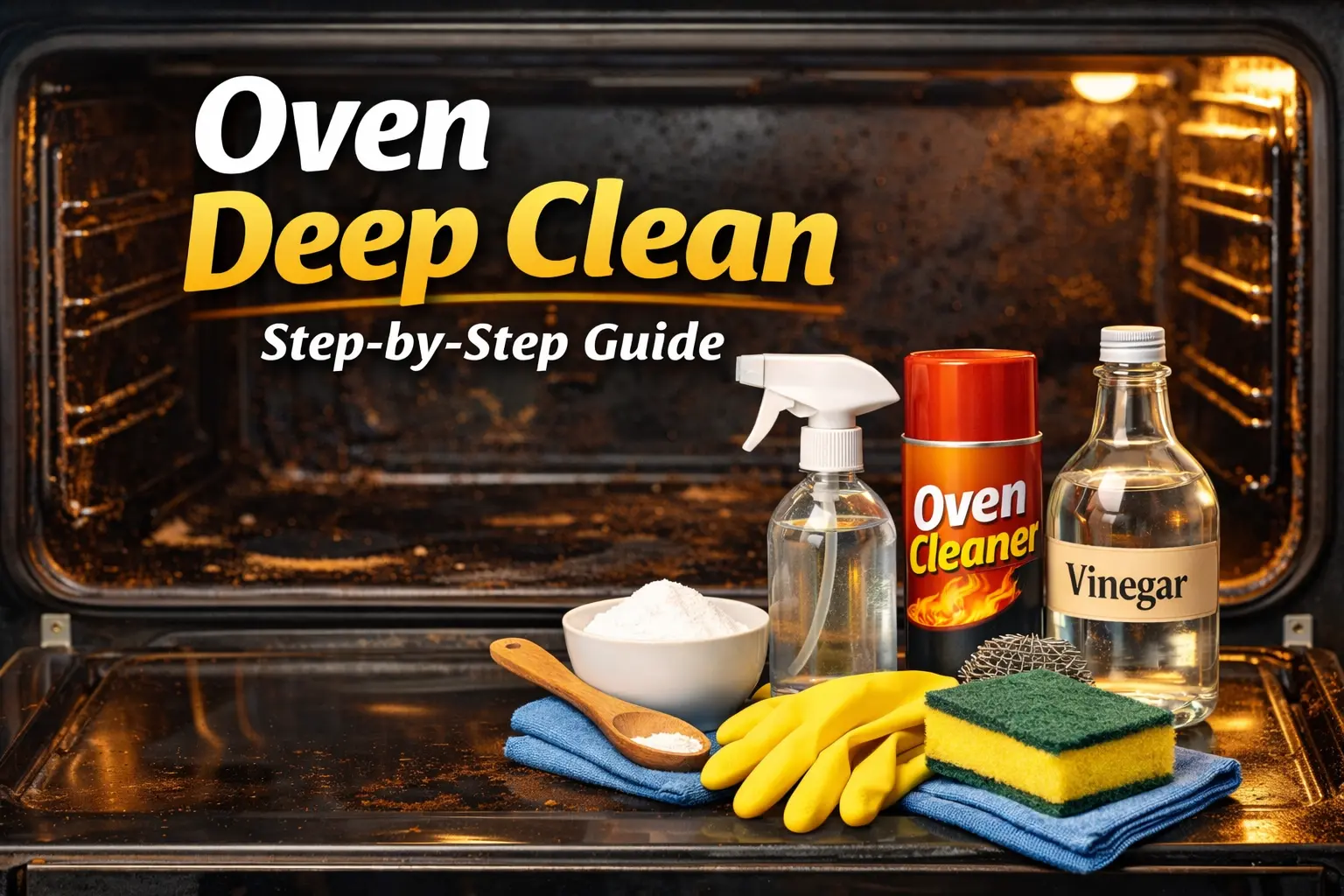
Here is a simple setup:
rubber gloves
microfiber cloths
non-scratch sponge
soft brush or old toothbrush
warm water
dish soap
baking soda
white vinegar
spray bottle
plastic or silicone scraper
trash bag or paper towels for loose crumbs
If your oven is very dirty, you may also use a commercial oven cleaner. Use it only as directed on the label, and make sure the area is well ventilated.
Safety first
Before you start:
turn the oven off
let it cool fully
open a window or use kitchen ventilation
keep kids and pets away during cleaning
never spray cleaner near a hot oven
How to deep clean an oven step by step
This is the best general method for a standard home oven.
Step 1: Turn off, cool down, and empty the oven
Make sure the oven is completely cool.
Take out:
racks
trays
thermometers
foil
loose crumb pieces
This gives you full access to the inside.
Step 2: Remove loose crumbs and dry dirt
Use a dry paper towel, cloth, or small brush to remove loose crumbs first.
This is important. If you skip it, you will turn dry dirt into a muddy mess.
Step 3: Apply your cleaning method
For a natural oven cleaning method, make a thick paste with baking soda and a small amount of water.
Spread the paste on:
the side walls
the bottom
the back panel
greasy corners
Try to avoid heavy rubbing on sensitive parts. Also avoid covering heating elements.
If you are using a commercial oven cleaner, follow the product label exactly and check your oven manual first.
Step 4: Let it sit and break down grease
This is where the hard work happens.
Let the baking soda paste sit for several hours or overnight. For lighter dirt, a shorter wait may still help.
The paste softens dried grease and burnt food, so wiping becomes much easier.
Step 5: Wipe, scrub gently, and rinse
Use a damp cloth or sponge to wipe out the paste.
For stubborn areas:
use a non-scratch sponge
use a plastic scraper gently
repeat the paste on thick spots if needed
After most of the paste is gone, lightly spray vinegar on any leftover baking soda. It will fizz. That helps loosen the final residue.
Wipe again with a clean damp cloth.
Do not leave cleaning residue behind.
Step 6: Dry fully before using the oven again
Dry the inside with a clean cloth.
Leave the oven door open for a while so moisture can escape.
Do not rush this step. A dry oven is better for smell control and safer for the next use.
Best way to clean oven racks
Oven racks often hold the most grease.
Here is an easy method:
Put the racks in a sink, tub, or large basin.
Add warm water and dish soap.
Let them soak.
Use a non-scratch sponge or soft brush to clean off grease.
Rinse well.
Dry fully before putting them back.
If the racks are very dirty, add baking soda paste to problem spots and let it sit before scrubbing.
Do not use tools that can scratch the metal badly unless your rack material allows it.
How to clean oven glass door
The oven door glass gets cloudy from grease and heat.
To clean it:
Put baking soda paste or a mild soapy mix on the inside glass.
Let it sit for a short time.
Wipe with a soft cloth or non-scratch sponge.
Rinse with a damp cloth.
Dry with a microfiber cloth for a clearer finish.
For the outside glass, a mild cleaner or warm soapy water is usually enough.
What about between oven glass panels?
Some ovens allow access, and some do not.
Check the user manual before trying to open the door or reach between panels. If your model is not designed for easy access, forcing it can cause damage.
Natural oven cleaning method vs commercial oven cleaner
Both methods can work. The best choice depends on how dirty the oven is.
Natural method
Best for:
regular maintenance
mild to medium grease
people who want a simple home method
Pros:
simple ingredients
less harsh smell
easy for routine cleaning
Cons:
slower
may need repeat cleaning on heavy buildup
Commercial oven cleaner
Best for:
thick baked-on grease
very dirty ovens
faster heavy-duty cleaning
Pros:
stronger
works faster on tough mess
Cons:
can have strong fumes
may not suit every oven type
needs careful label reading
If you are unsure, start with the gentler method first.
Self-cleaning oven vs manual cleaning
A self-cleaning oven uses very high heat to burn off food residue.
That sounds easy, but it is not always the best choice for every situation.
Before using self-clean mode:
check the manual
remove racks if the manual says so
make sure the kitchen is ventilated
know that smoke or smell may happen
Manual cleaning gives you more control. It is slower, but many people prefer it for regular upkeep.
If your oven is labeled as self-cleaning, do not assume every cleaner is safe for it. Always check the manual first.
How often to deep clean an oven
There is no single rule for every home.
A good guide is:
deep clean sooner if you cook often
deep clean sooner if food spills often
do a light wipe after messy meals
do not let grease build for too long
The more often you wipe small spills, the easier the next oven deep clean will be.
Common mistakes to avoid
1. Cleaning a hot oven
This is unsafe and can make fumes worse.
2. Using rough tools
Steel wool and harsh scraping can scratch the inside or damage the glass.
3. Ignoring the user manual
Some ovens have special coatings, special racks, or self-cleaning settings.
4. Leaving cleaning product behind
Any leftover residue can smell bad during the next use.
5. Soaking parts that should not be soaked
Not every oven part should sit in water. Check what is removable.
6. Rushing the waiting time
If you wipe too soon, grease may stay stuck.
7. Forgetting ventilation
Fresh air matters, especially with stronger cleaners.
Quick checklist for oven deep cleaning
Use this simple oven cleaning checklist:
Oven is turned off
Oven is fully cool
Racks and trays removed
Loose crumbs wiped out
Cleaning paste or cleaner applied
Wait time completed
Interior wiped clean
Glass door cleaned
Racks washed and dried
No residue left behind
Oven dried before reuse
Real-life example
Imagine pasta sauce spills over during dinner. You tell yourself you will clean it later. Then you bake pizza the next day, and the spill burns again. A week later, the oven smells smoky.
That is how buildup starts.
A deep clean resets the oven. Then simple wipe-downs after cooking help keep it under control.
Safe-use note
Always test any cleaning method on a small area first if you are unsure.
If you have a specialty oven, a premium finish, or a self-cleaning model, read the manual before using baking soda, vinegar, or a commercial product.
If fumes feel too strong, stop and ventilate the area.
FAQs
1. What is the best way to deep clean an oven?
For most standard ovens, the best method is to remove the racks, apply baking soda paste inside, let it sit, then wipe and rinse well. It is simple and works well for regular buildup.
2. Can I deep clean an oven with baking soda only?
Yes, baking soda works well for many ovens. It helps loosen grease and burnt food. Very heavy buildup may need repeat cleaning or a stronger product.
3. How long does an oven deep clean take?
It depends on how dirty the oven is. Active cleaning may be short, but waiting time for the paste or cleaner makes the full process longer.
4. How do I clean really dirty oven racks?
Soak them in warm soapy water, then scrub gently with a non-scratch sponge. Add baking soda paste to hard spots if needed.
5. Can I use vinegar to clean my oven?
Yes, vinegar is useful for wiping away baking soda residue and helping loosen grime. It is often used after the paste treatment.
6. Is oven cleaner safe for all ovens?
No. Some ovens, especially self-cleaning models or ovens with special coatings, may have limits. Always check the manual and the cleaner label.
7. How often should I deep clean my oven?
That depends on how often you cook and how messy the oven gets. A light clean after spills helps reduce the need for heavy deep cleaning.
8. What should I never use to clean an oven?
Avoid anything that can scratch or damage the surface, such as very rough scrubbers or tools not meant for oven interiors.
9. Can I clean the oven glass with baking soda?
Yes. Baking soda paste is a common and gentle way to clean oven glass when used with a soft cloth or non-scratch sponge.
10. Why does my oven still smell after cleaning?
There may still be residue left inside, or the oven may not be fully dry. Wipe again with clean water and let it air out before use.
Conclusion + next step
An oven deep clean does not have to feel hard. The key is to work in the right order: cool the oven, remove the racks, loosen the grease, wipe gently, and dry everything well.
If your oven is only lightly dirty, start with the natural method. If it has thick burnt grease, you may need a stronger cleaner and extra care.
Your next step is simple: pick a day, gather your supplies, and do one full clean. After that, quick wipe-downs will keep the job much easier.
Key Takeaways
An oven deep clean removes old grease, burnt food, and trapped smells.
Baking soda paste is a simple and beginner-friendly cleaning method.
Clean the oven interior, racks, and glass separately for the best result.
Always check your oven manual before using strong cleaners or self-clean mode.
Small wipe-downs after spills help prevent heavy buildup later.
Glossary
Deep clean: A full clean that removes old dirt, grease, and hidden mess.
Grease buildup: Layers of oily dirt that stick over time.
Baking soda paste: A mix of baking soda and water used for gentle cleaning.
Self-cleaning oven: An oven with a special high-heat cleaning cycle.
Residue: Cleaner or dirt left behind after wiping.
Non-scratch sponge: A soft sponge made to clean without damaging surfaces.
Ventilation: Fresh airflow from a window, fan, or vent.
Burnt-on food: Food spills that have hardened after repeated heating.
Answer box
An oven deep clean means removing grease, burnt food, and grime from the oven interior, racks, and glass door. The easiest method is to let the oven cool, remove the racks, apply baking soda paste, let it sit, then wipe and rinse well. Always check your oven manual before using strong cleaners or self-clean mode.