How to Clean a Blender the Right Way
If your blender smells weird, looks cloudy, or still has old smoothie stuck around the blades, you are not the only one. The good news is that blender cleaning is usually quick when you do it right away. For most messes, all you need is warm water, a little dish soap, and a short blend. For stronger smells or greasy buildup, a deeper clean helps. This guide shows you how to clean a blender the easy way, how to deep clean it safely, and how to keep it fresh for smoothies, soups, sauces, and more.
Quick Answer
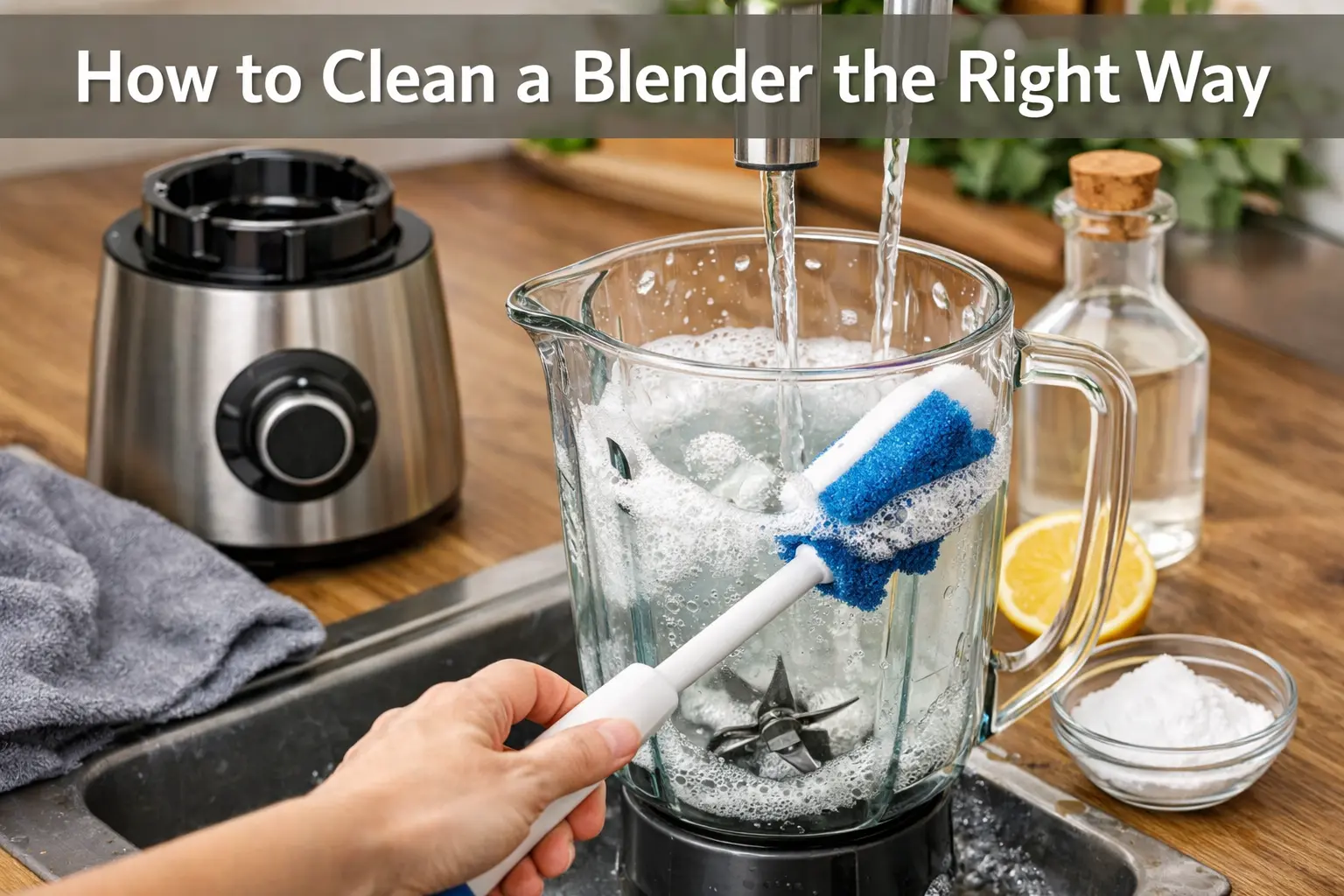
The easiest way to clean a blender is to rinse it right after use, fill it partway with warm water, add 1 or 2 drops of dish soap, and blend for 15 to 30 seconds. Then rinse it again and let it dry. If it still smells bad or feels greasy, clean the lid, gasket, and blade area more carefully and wipe the motor base with a damp cloth only.
In Short
- Clean your blender right after every use.
- For daily cleaning, blend warm water and a little dish soap.
- Deep clean the lid, gasket, and blade area when needed.
- Use baking soda or vinegar for odors and oily buildup.
- Never soak the motor base.
- Check your manual before putting blender parts in the dishwasher.
Why Blender Cleaning Matters
A clean blender does more than just look nice.
It helps your food and drinks taste fresh. A fruit smoothie should not taste like yesterday’s garlic dressing.
It also helps stop buildup in the places people forget, like the lid rim, rubber seal, and the area around the blades.
And it saves time. When you clean a blender right away, the job is easy. When you leave it sitting on the counter, food dries up and turns into a bigger mess.
Think of it like washing a pan after eggs. Fresh mess is simple. Dried mess is a chore.
The Best Way to Clean a Blender After Every Use
This is the simple method most people need.
Quick Daily Blender Cleaning
- Empty the blender jar.
- Rinse it with warm water.
- Fill it about one-third to halfway with warm water.
- Add 1 or 2 drops of dish soap.
- Put the lid on tightly.
- Blend for 15 to 30 seconds.
- Pour out the soapy water.
- Rinse again with clean water.
- Let the jar and lid dry fully.
That is the easiest daily blender cleaning routine for most homes.
This method works well for:
- smoothies
- protein shakes
- pancake batter
- light sauces
- blended soups
If your blender has a self-clean or clean cycle, use that setting instead.
How Often Should You Clean a Blender?
You should do a quick clean after every use.
That one habit helps stop smells, stains, and stuck-on food before they become a problem.
You should also deep clean your blender now and then, especially if you:
- make thick smoothies often
- blend nut butters
- use garlic, onion, or strong spices
- make oily dressings or sauces
- notice bad smells or cloudy spots
- see buildup around the lid or gasket
A quick wash is daily care. A deep clean is your reset.
How to Deep Clean a Blender
Sometimes a fast rinse is not enough.
If your blender still smells bad, has greasy film, or has food stuck around the blades, it is time for a deeper clean.
Step 1: Unplug the Blender
Always unplug it first. This matters even if you are only cleaning the jar area.
Step 2: Take Apart the Removable Parts
Remove the jar, lid, center cap, and seal if your blender model allows it.
Step 3: Wash the Jar and Lid
Use warm soapy water and a soft sponge or bottle brush. Clean the top edge of the jar and the underside of the lid. Those are easy places for food to hide.
Step 4: Clean the Gasket or Seal
This rubber ring is one of the biggest odor traps in the whole blender. Wash it gently and rinse it well.
Step 5: Clean Around the Blades Carefully
Do not use your bare fingers near sharp blades. Use a brush with a handle so you can reach tight spots more safely.
Step 6: Rinse and Dry Everything Fully
Let all the parts dry before putting the blender back together. If moisture gets trapped, smells can come back.
How to Clean Blender Blades Safely
This is the part that makes many people nervous.
Blender blades are sharp, and they are easy to underestimate. The safest way to clean them is to start with the soap-and-water blending method first. That takes care of most messes without your hands going near the blade.
If food is still stuck there, unplug the blender and use a long-handled brush or bottle brush. Slow and steady is better than trying to rush.
A simple rule helps here: if your fingers do not need to go there, do not put them there.
How to Remove Blender Smells
Some foods leave strong smells behind, especially:
- protein powder
- bananas
- onions
- garlic
- salad dressing
- nut butters
- oily sauces
If your blender still smells after washing, try this method.
Odor-Removal Method
- Fill the blender partway with warm water.
- Add a small splash of white vinegar or a spoonful of baking soda.
- Blend for a few seconds.
- Rinse well.
- Wash the lid and gasket again.
If the smell is still there, the problem is often the seal, not the jar.
How to Remove Stains or a Cloudy Blender Jar
Bright foods can stain plastic jars fast. Berries, tomato sauce, greens, and turmeric are common troublemakers.
Hard water and normal wear can also make the jar look cloudy.
For Stains
- Make a gentle paste with baking soda and water.
- Rub it lightly on the stained area.
- Let it sit for a short time.
- Rinse and wash again.
For Cloudiness
- Wash the jar gently with warm soapy water.
- Rinse well.
- Repeat if needed.
Do not scrub with harsh pads. Rough scrubbers can scratch the jar and make it look worse over time.
Can You Put a Blender in the Dishwasher?
Sometimes yes, and sometimes no.
It depends on the blender model.
Some jars, lids, and caps are dishwasher safe. Others are better washed by hand. The motor base should never go in the dishwasher and should never be soaked in water.
The safest answer is simple: check your manual first.
If you are not sure, hand washing is usually the safer choice.
Common Blender Cleaning Mistakes to Avoid
Waiting Too Long
This is the biggest mistake. Once residue dries, cleaning gets harder fast.
Forgetting the Lid and Gasket
People clean the jar and forget the spots that actually hold the smell.
Using Your Fingers Near the Blades
Use a brush instead. It is safer and easier.
Soaking the Motor Base
The base holds the motor. Water and motors do not mix well.
Using Harsh Scrubbers
These can scratch the jar and make it look dull or cloudy.
Putting Everything in the Dishwasher Without Checking
Not every blender is built the same way.
Quick Blender Cleaning Checklist
Before you put your blender away, make sure you did these things:
- emptied the jar
- rinsed it right away
- used warm water and a little dish soap
- cleaned the lid and seal
- checked around the blade area
- wiped the base with a damp cloth only
- dried all parts fully
That simple routine keeps most blender problems from showing up in the first place.
FAQs
How often should you clean a blender?
After every use. A quick clean takes very little time and keeps food from drying inside.
What is the best way to clean a blender?
For everyday messes, blend warm water with 1 or 2 drops of dish soap, then rinse and dry.
How do I deep clean a blender?
Take apart the removable parts, wash the jar, lid, seal, and blade area carefully, then dry everything before putting it back together.
Why does my blender still smell after washing?
The smell may be stuck in the lid, gasket, or blade area instead of the jar itself.
Can I use vinegar to clean a blender?
Yes. A small amount can help with smells and oily buildup. Rinse the blender well afterward.
Can I put my blender in the dishwasher?
Some parts may be dishwasher safe, but it depends on the model. Always check the manual first.
How do I clean a blender after smoothies?
Rinse it right away, then blend warm water and a drop of dish soap for 15 to 30 seconds.
How do I clean blender blades safely?
Start with the self-clean method, then use a long-handled brush if needed. Do not reach in with your bare hand.
What should I never do when cleaning a blender?
Do not soak the motor base, do not use harsh scrubbers, and do not put your fingers near sharp blades.
Final Thoughts
Blender cleaning does not need to be a big job. In most cases, the simple method works best: rinse it fast, blend warm water with a little dish soap, and let it dry. For stronger smells or stuck-on messes, clean the lid, gasket, and blade area more carefully.
The key is not some fancy cleaning trick.
It is a small habit.
Clean it right away, and your blender stays fresh, safe, and ready for the next thing you make.