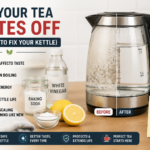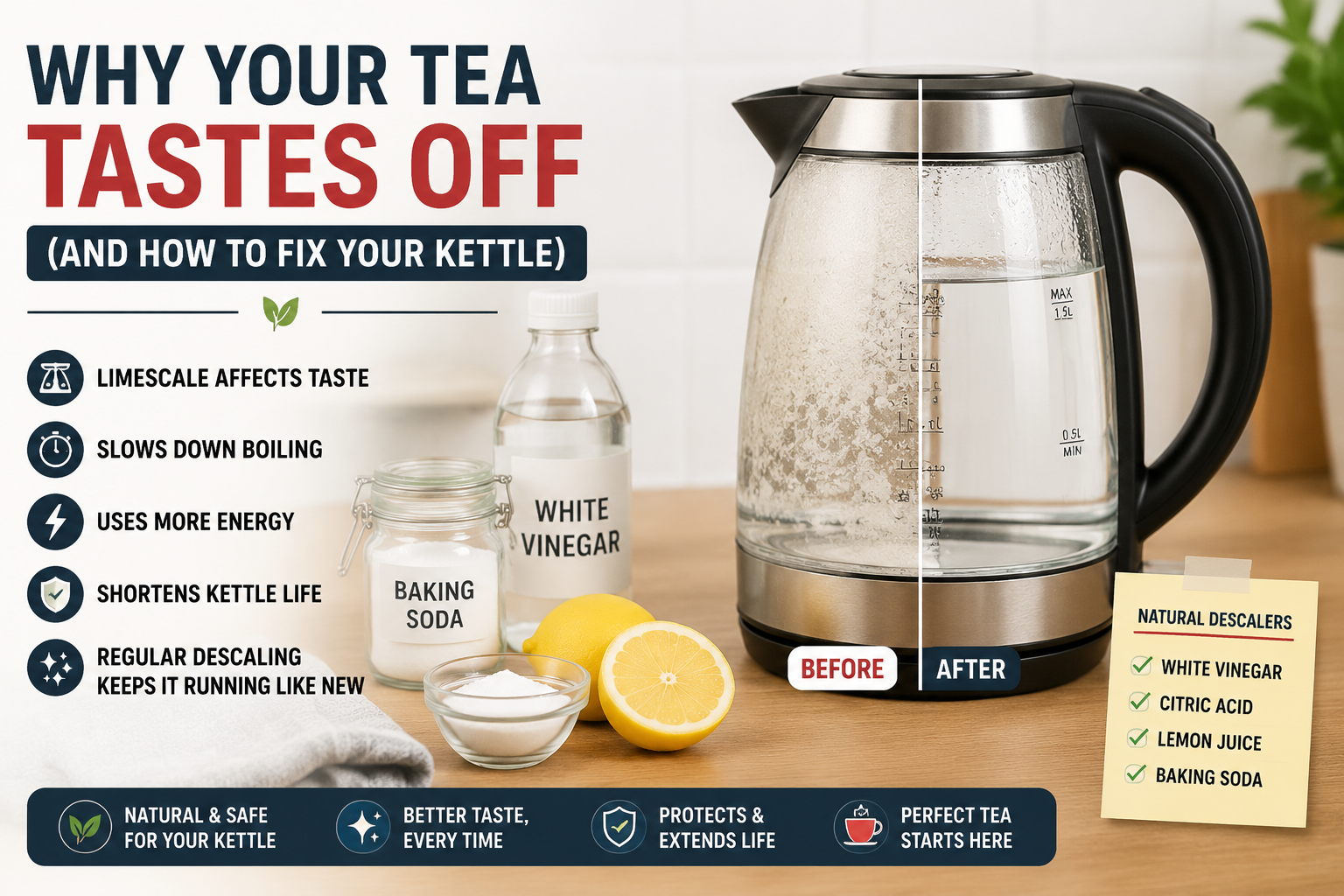
Fix your kettle is one of the hardest-working appliances in the kitchen — which is exactly why hard water takes its toll so fast. Mineral deposits, or limescale, build up inside quicker than most people expect, and it doesn’t just look bad. It affects how your tea and coffee taste, slows down boiling, and shortens how long the kettle lasts.
After testing several descaling methods over the past few years across different kettle types — glass, stainless steel, and plastic — I’ve found that regular descaling with natural ingredients gives the best results without risking damage to the appliance. Here’s what actually works, based on real testing rather than guesswork.
Why Descaling Actually Matters
- Taste — limescale gives water a metallic, slightly bitter edge that ruins tea and coffee.
- Boiling efficiency — scale-coated heating elements take noticeably longer to bring water to a boil.
- Heating element lifespan — thick limescale causes overheating and, over time, real damage to the element.
- Energy usage — an inefficient kettle simply uses more electricity to do the same job.
- Hygiene — bacteria can develop in thick limescale deposits over time.
- Long-term cost — neglect leads to early failure, meaning you’re replacing kettles more often than you should be.
What Limescale Buildup Actually Causes
- Bad-tasting water — minerals leach directly into whatever you’re brewing.
- Slow boiling — scale insulates the heating element, wasting both time and electricity.
- Early shutoff — kettles sometimes cut out before water even boils, due to scale-driven overheating.
- Visible white flakes — heavy limescale breaking off and floating in the water.
- Strange noises while boiling — scale interfering with how the heating element functions.
- A shortened lifespan overall, from continuous internal damage.
Signs Yours Needs Descaling
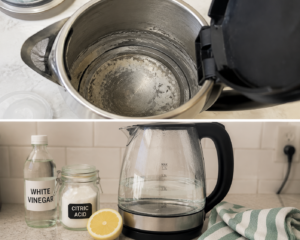
- White, chalky residue inside
- Boiling taking noticeably longer than usual
- A metallic or off taste in the water
- Visible scale flakes floating around
- Unusual noises while it’s heating
- The kettle shutting off before water actually boils
How Often You Should Descale
This comes down almost entirely to your water hardness:
- Very hard water: every 2–4 weeks — non-negotiable at this point.
- Hard water: every 4–6 weeks.
- Moderate water: every 6–8 weeks.
- Soft water: every 2–3 months is usually enough.
What You’ll Need
- White vinegar — the most effective natural descaler I’ve tested, hands down.
- Fresh lemon — good for lighter scale and leaves a nice fresh smell.
- Baking soda — better suited to surface stains on the exterior than heavy internal scale.
- Citric acid — a strong natural descaler, especially good for heavy buildup.
- An old toothbrush — genuinely useful for the spout and other tight areas.
- A microfiber cloth — for wiping and drying without leaving lint behind.
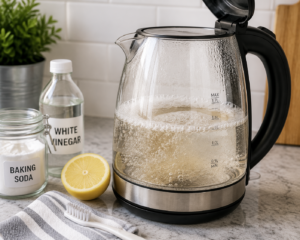
Step-by-Step Descaling Guide
- Unplug the kettle and let it cool completely (about 10 minutes). Always start here — safety first.
- Fill it halfway with equal parts water and white vinegar. This is the most effective combination I’ve tested.
- Bring it to a boil, then let it sit for 15–30 minutes. Longer sitting time consistently gives better results.
- Pour out the solution and rinse 2–3 times with fresh water — this matters more than people expect, since leftover vinegar taste is hard to miss otherwise.
- Wipe the interior with a soft cloth or sponge to remove any remaining loose scale.
- Clean the spout and lid with an old toothbrush — don’t skip this part, it’s where scale hides the most.
- Wipe the exterior and dry completely, which also helps prevent new scale from forming right away.
Cleaning the Exterior and Lid
- Exterior body: wipe with a damp microfiber cloth using diluted vinegar or soapy water.
- Stubborn stains: a baking soda paste left on for 5–10 minutes handles most of these.
- Spout: an old toothbrush with a vinegar solution, cleaned both inside and out.
- Lid and seal: wipe with a damp cloth, paying particular attention to the rubber seal.
- Base: wipe gently and never submerge — this is where the electrical components live.
Best Natural Cleaners to Fix Your Kettle
- White vinegar — excellent on heavy limescale, equal parts with water and boiled. My top pick, consistently.
- Citric acid — just as strong, dissolved in water and boiled the same way. Great for stubborn, thick scale.
- Lemon juice — solid for light to moderate scale, mixed with water and boiled.
- Baking soda — best for surface stains rather than internal scale; make a paste and gently scrub.
Mistakes to Avoid
- Harsh chemical descalers — they can damage the kettle and leave behind residue. Natural methods like vinegar work just as well without the risk.
- Skipping the rinse — leftover vinegar taste lingers if you don’t rinse 2–3 times.
- Overfilling during descaling — the solution can overflow while boiling, so stick to the max fill line.
- Cleaning while it’s plugged in — always unplug first, no exceptions.
- Abrasive scrubbers — they scratch the interior. Soft sponge or cloth only.
Preventing Limescale in the First Place
- Use filtered or bottled water where you can — it drastically cuts down mineral buildup.
- Empty the kettle after each use instead of leaving standing water inside.
- Wipe the interior weekly to stop scale from building up heavily between descalings.
- Stick to a descaling schedule based on your water hardness rather than waiting for problems to show up.
- Avoid repeatedly re-boiling the same water, which speeds up mineral deposits.
Frequently Asked Questions
How often should I descale my kettle? It depends on your water hardness — every 2–4 weeks for very hard water, every 6–8 weeks if your water is moderate to soft.
Can I use vinegar to descale it? Yes — white vinegar is one of the most effective and safest natural descalers I’ve tested. Equal parts vinegar and water, boiled, then left to sit.
Is lemon juice as effective as vinegar? It works well for light to moderate scale and smells fresher, but vinegar consistently outperforms it on heavier limescale.
How do I get rid of the vinegar smell afterward? Rinse thoroughly 2–3 times with fresh water. Boiling and discarding one batch of plain water afterward helps too.
Can I use citric acid instead? Absolutely — dissolve 1–2 tablespoons in water and follow the same boiling method as vinegar.
Is baking soda safe for descaling? It’s better suited to surface stains than heavy internal limescale. For real buildup, vinegar or citric acid will do a better job.
Can I put my electric kettle in the dishwasher? No — never. Electric kettles should only be cleaned by hand.
Final Thoughts
After testing this across multiple kettles and methods, white vinegar or citric acid on a consistent schedule gives the best results by far. It improves taste, keeps boiling efficient, and genuinely extends how long your kettle lasts.
I tested the white vinegar method on several kettles — glass, stainless steel, and plastic — and it consistently removed limescale effectively without any damage to the appliance.
About the Author KitchenBite Team — practical kitchen appliance cleaning guides based on real testing and experience.
Last updated: July 13, 2026
Disclaimer: The cleaning methods in this article are for informational purposes only. Always follow your electric kettle manufacturer’s care instructions. We’re not responsible for any damage caused by using these methods — use at your own risk.