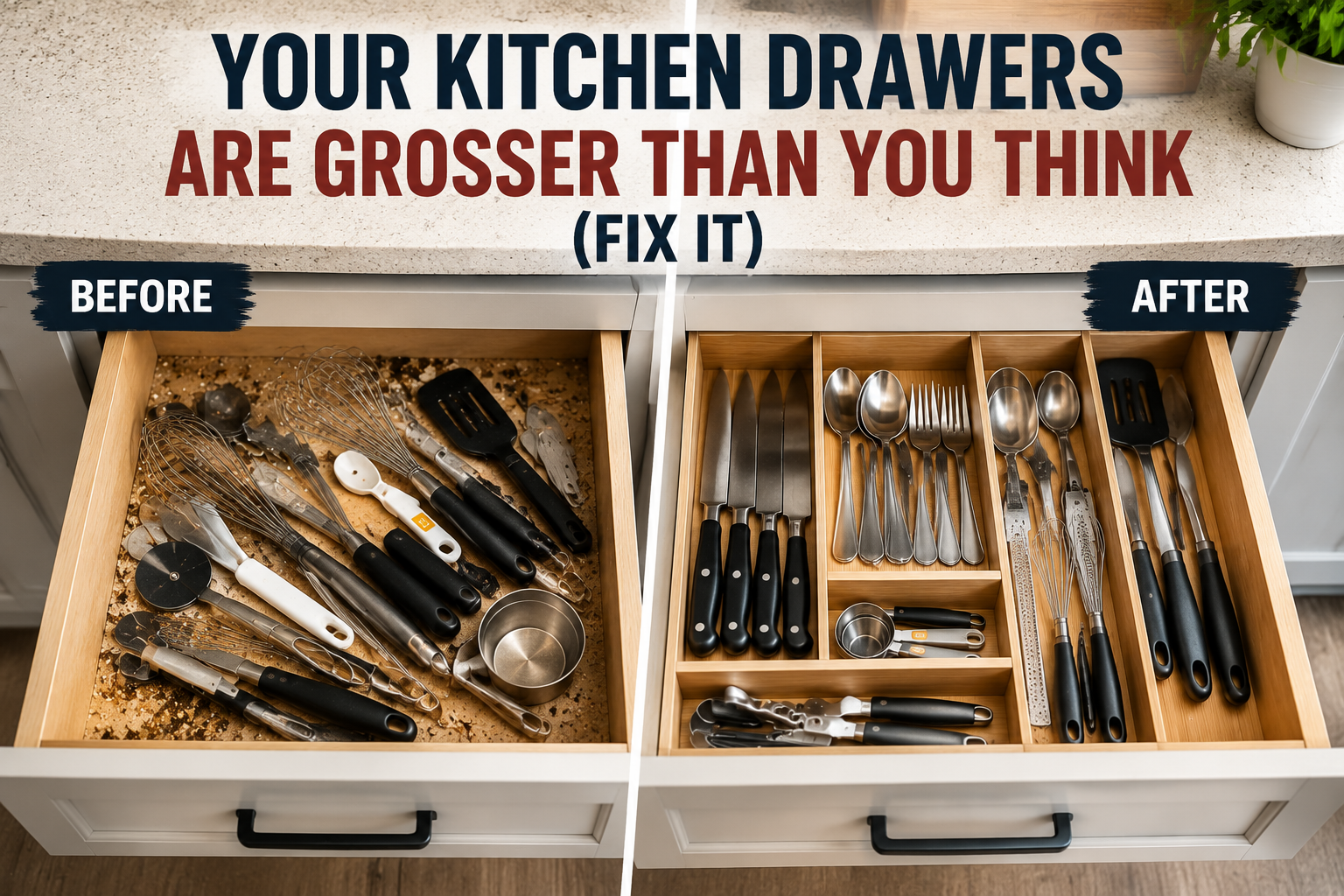
Kitchen drawers get used constantly, yet somehow stay the most neglected storage space in the house. Over time they collect crumbs, grease, food particles, and clutter — turning messy, unhygienic, and genuinely frustrating to dig through.
After testing different cleaning and organizing methods in my own kitchen over the years, I’ve found that regular maintenance paired with smart storage makes a real difference — not just in cleanliness, but in how much easier the kitchen is to actually use day to day. Here’s what works.
Why This Is Worth Doing Properly
- Hygiene — crumbs and grease attract bacteria, mold, and pests faster than you’d think.
- Functionality — cluttered drawers mean wasted time hunting for the utensil you need.
- Kitchen appearance — messy drawers quietly drag down how the whole kitchen feels.
- Pest prevention — food residue is basically an invitation for ants, roaches, and mice.
- Efficiency — every minute spent searching is a minute not spent cooking.
- Peace of mind — an organized kitchen genuinely reduces stress while you’re cooking, even if it sounds minor.
Common Problems in Kitchen Drawers
- Crumbs and food particles from skipped regular cleaning
- Grease and sticky residue from cooking splatters and spills
- Overcrowding, from storing too much without any real system
- Mixed, disorganized items that waste time every time you open a drawer
- Bad odors from old food residue and trapped moisture
- Jammed or damaged drawers, usually from overloading over time
Signs It’s Time to Clean and Organize
- Visible crumbs and food particles
- Trouble opening or closing the drawer smoothly
- A bad smell coming from inside
- Utensils and tools all mixed together with no system
- Ants or insects showing up
- Items falling out when you open it
How Often You Should Do This
- Heavy daily use: light clean every 2–3 weeks, deep clean and organize every 2–3 months.
- Moderate use: light clean monthly, deep clean every 3–4 months.
- Light use: light clean every 6 weeks, deep clean every 4–6 months.
What You’ll Need
- Gloves — genuinely helpful for hygiene during the messier parts
- Trash bags to make decluttering easier as you go
- Warm water and dish soap for general cleaning
- Baking soda and white vinegar — the most effective natural combo I’ve found for deep cleaning and odor removal
- An old toothbrush for corners and tight spaces
- Microfiber cloths for wiping and drying without leaving lint
- Drawer dividers or organizers — this is the step that actually transforms how a drawer functions
- Labels, to make finding things instant instead of a search
- A vacuum with a nozzle attachment, for fast crumb and debris removal
Step-by-Step Cleaning Guide
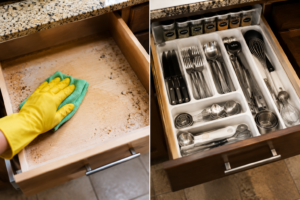
- Empty the drawer completely. Starting fresh every time makes the whole process easier.
- Remove loose crumbs and debris — a quick vacuum pass first gives the best results.
- Wipe the interior with warm, soapy water, paying extra attention to corners and edges.
- Use a baking soda and vinegar mix on stubborn grease, letting it sit a few minutes before wiping.
- Clean the drawer tracks and hardware — an old toothbrush works surprisingly well here.
- Dry the drawer thoroughly to prevent mold and lingering odors.
- Clean the items themselves before putting them back — utensils and tools included.
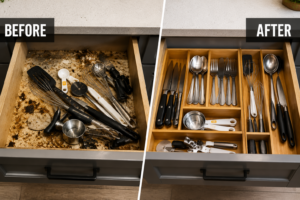
- Organize with dividers and labels. Honestly, this is the step that makes the biggest visible difference.
Organizing Kitchen Drawers Effectively
After testing a handful of storage approaches, here’s what actually held up:
- Drawer dividers — best for utensils, cutlery, and tools. Keeps everything separated and instantly findable.
- Small trays or bins — ideal for spices, small gadgets, and anything that tends to roll around loose.
- Labels — small effort, but they save real time every single day.
- Stackable organizers — great for measuring cups and other small items, since they make use of vertical space.
- Pegboard-style inserts — customizable and efficient for pots, pans, and larger utensils.
- Over-the-door organizers — a solid option for small items if drawer space is genuinely tight.
- How to Protect Wooden Kitchen Cabinets From Termites and Damage
Best Natural Cleaners for This Job
- Baking soda + vinegar — very effective on grease, crumbs, and odors, used as a spray or paste.
- Lemon + baking soda — good for a fresh smell and lighter stains.
- Dish soap and hot water — reliable for everyday general cleaning.
- White vinegar alone — works well for odor removal and lighter grease
- Deep Clean Kitchen Trash Can Remove Odor and Germs Fast
Mistakes to Avoid
- Overloading drawers — items get damaged and the drawer itself can jam. Keep only what you actually use often.
- Skipping regular cleaning — grease and crumbs build up fast, and heavy buildup is far harder to deal with later.
- Storing rarely-used items in prime drawer space — move those to cabinets instead and free up the space you actually need daily.
- Ignoring the drawer tracks — neglected tracks are the real reason drawers get hard to open and close.
- Reaching for harsh chemical cleaners — strong fumes near food storage isn’t worth it when natural options work just as well.
Preventing Future Clutter
- Declutter every 3 months so mess doesn’t quietly build back up.
- Wipe spills the moment they happen, before they turn sticky.
- Keep drawer organizers in place long-term rather than as a one-time fix.
- Avoid storing food items directly in drawers — it’s an easy way to attract pests.
- Clean one drawer at a time on a regular basis, so it never feels like an overwhelming task.
Frequently Asked Questions
How often should I clean my kitchen drawers? Light cleaning every 2–3 weeks, with a proper deep clean and reorganization every 2–3 months.
What’s the best way to remove grease? A baking soda and vinegar solution — apply it, let it sit a few minutes, then wipe with a soft cloth.
How can I organize my drawers better? Drawer dividers, small trays, and labels go a long way. Grouping similar items together (all measuring spoons in one spot, for example) makes the biggest practical difference.How to Clean Granite and Marble Countertops Daily Without Damage
Should I line my drawers? Yes — non-slip drawer liners make cleaning easier and protect the surface from scratches and spills.
How do I deal with ants or pests? Deep clean thoroughly, remove all food residue, and seal any gaps. A natural repellent like vinegar can help too.
Can I use bleach to clean kitchen drawers? It’s better to avoid it — the fumes are strong for a food storage area. Baking soda and vinegar work just as well without that downside.
What should I do with items I rarely use? Move them to upper cabinets or other storage, freeing up drawer space for what you actually reach for daily.
Final Thoughts
After testing several cleaning and organizing approaches over time, drawer dividers combined with regular deep cleaning consistently gave the best long-term results. It improves hygiene, keeps pests away, saves time while cooking, and makes the kitchen genuinely more pleasant to use.
I tested these methods — especially the drawer dividers and the baking soda + vinegar combination — in a real kitchen, and the difference in both cleanliness and daily usability was noticeable.
About the Author KitchenBite Team — practical kitchen cleaning and organizing guides based on real testing and experience.
Last updated: July 13, 2026
Disclaimer: The cleaning and organizing methods in this article are for informational purposes only. We’re not responsible for any damage caused by using these methods — use at your own risk.