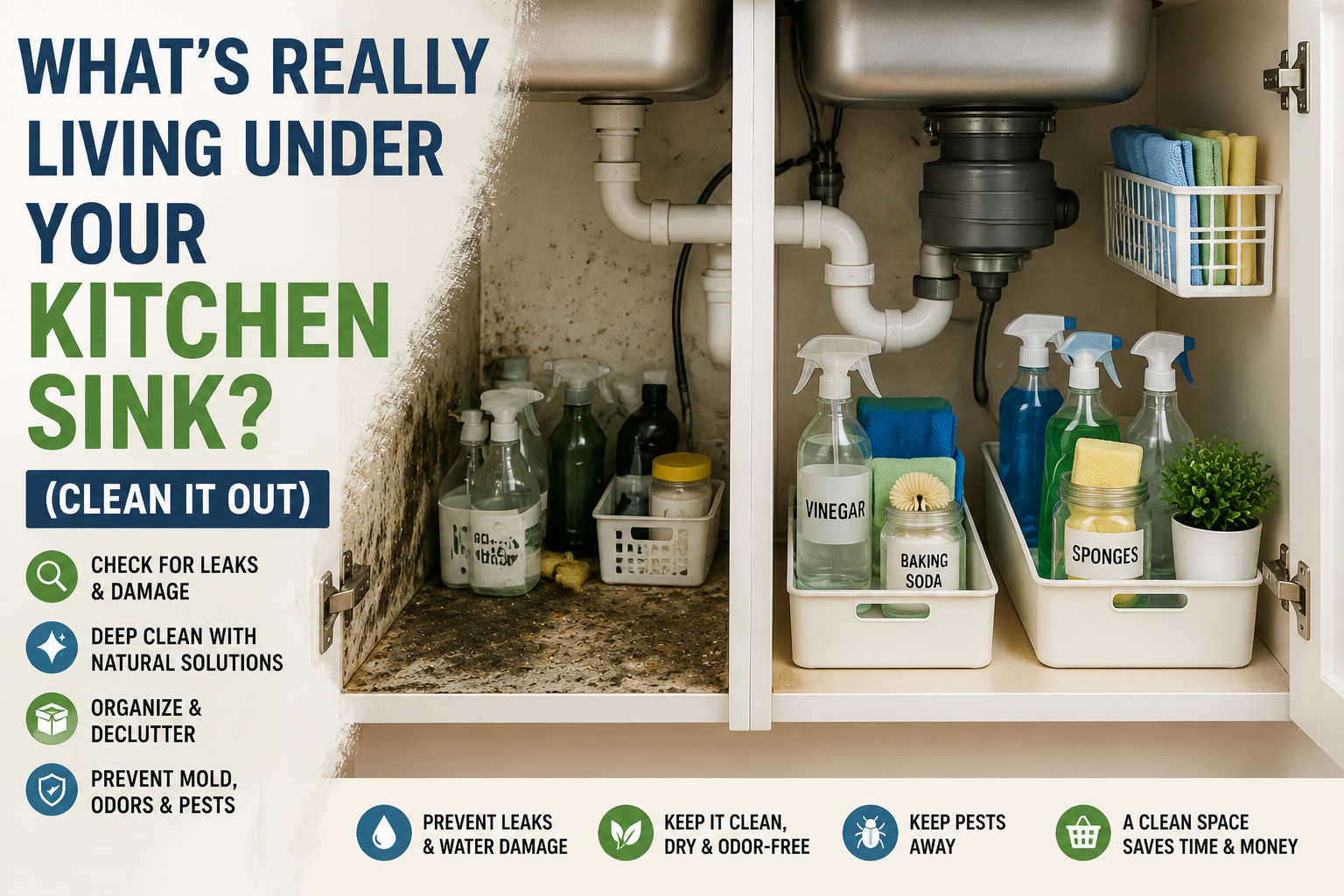
The space under your kitchen sink is probably the most neglected corner of the whole room. It ends up as a dumping ground for cleaning supplies, dish soap, sponges, and garbage bags — all while quietly dealing with leaks, moisture, mold, and the occasional unwelcome pest.
Left alone long enough, it develops bad odors, hidden leaks, mold, and sometimes insects. Beyond just looking messy, a neglected under-sink area can lead to real problems — water damage and health concerns among them.
Here’s how to properly deep clean and organize it using safe, natural methods.
Why This Space Deserves the Attention
- Hygiene and health — mold, bacteria, and bad odors thrive in dark, damp, unchecked spaces.
- Pest prevention — ants, roaches, and other pests are drawn straight to moisture.
- Plumbing safety — small leaks that go unnoticed can turn into major water damage before you even realize it.
- Functionality — a cluttered space means you can never actually find what you’re looking for.
- Kitchen appearance — an organized under-sink area makes the whole kitchen feel more put-together.
- Long-term savings — catching mold or leaks early prevents expensive repairs down the line.
Common Problems Found Here
- Mold and mildew, usually from constant moisture and poor ventilation
- Hidden leaks — old pipes, loose connections, or corrosion that go unnoticed for a while
- Pests, attracted by food residue, standing water, and general clutter
- Disorganization — too much stored without any real system
- Bad odors from mold, old sponges, or trapped moisture
- Hard water stains, often a sign of a slow, ongoing leak
Signs It Needs Attention
- A musty or moldy smell
- Visible mold or black spots
- Water stains on the cabinet floor
- Insects showing up regularly
- Trouble finding your own cleaning supplies
- Standing water or dampness anywhere inside
How Often to Deep Clean and Declutter
- Heavy daily use: declutter every 2–3 weeks, deep clean every 2–3 months.
- Moderate use: declutter monthly, deep clean every 3–4 months.
- Light use: declutter every 6 weeks, deep clean every 4–6 months.
What You’ll Need
- Gloves, to protect your hands from cleaning solutions
- Trash bags for disposing of old items and debris
- Warm water and dish soap for general cleaning
- Baking soda and white vinegar for natural deep cleaning and odor removal
- An old toothbrush for tight corners and around pipes
- Microfiber cloths for wiping and drying
- A spray bottle for applying solutions
- Pull-out trays or storage bins to organize what you keep
- Labels, to make everything easy to find later
- A flashlight, for checking dark corners and pipes
- A bucket, in case you need to catch water while inspecting for leaks
Step-by-Step Cleaning Guide
- Empty everything out and sort into keep, toss, and relocate piles.
- Check for leaks and water damage using a flashlight and a simple paper towel test along the pipes.
- Remove loose debris and old items — this is a good moment to toss anything expired or unused.
- Clean the cabinet interior with a baking soda and vinegar solution.
- Clean around the pipes, garbage disposal area, and walls with soapy water.
- Dry everything thoroughly — this step matters more than it seems, since leftover moisture is exactly what invites mold back in.
- Organize what’s left using bins and trays, grouping similar items together.
- Label your containers so future-you doesn’t have to dig through everything again.
Clean Under Kitchen Sink
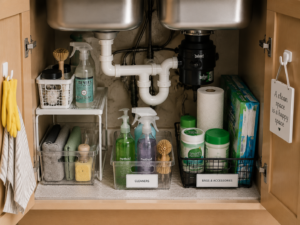
- Pull-out trays or drawers for cleaning supplies and sponges — easy access without bending awkwardly into the cabinet.
- Clear, stackable bins for grouping similar items so you can see what’s inside at a glance.
- A tension rod with S-hooks to hang spray bottles, freeing up floor space.
- An over-the-door organizer for small items like gloves or sponges.
- A lazy Susan for bottles and jars, so nothing gets lost at the back.
- Labels on every bin — small effort, but it saves real time later.
Best Natural Cleaners for This Space
- Baking soda + vinegar — very effective on mold, odors, and grease, used as a spray or paste.
- Lemon + baking soda — good for a fresh smell and lighter stains.
- Dish soap and hot water — reliable for general everyday cleaning.
- White vinegar alone — works well on hard water stains and lingering odors.
Mistakes to Avoid
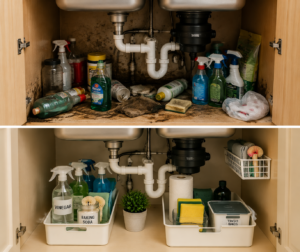
- Storing items directly on the cabinet floor — makes cleaning harder and increases water damage risk. Use trays or bins to keep things lifted.
- Ignoring small leaks — they rarely stay small. Fix them the moment you notice.
- Overcrowding the space — makes both cleaning and finding things unnecessarily difficult.
- Skipping pest checks — an infestation can take hold quietly if you’re not looking.
- Reaching for harsh chemical cleaners — strong fumes build up fast in an enclosed cabinet space. Natural cleaners work just as well without the risk.
Preventing Future Problems
- Check for leaks monthly — a quick look takes seconds and saves a lot of hassle later.
- Declutter every 3 months so things don’t quietly pile back up.
- Keep products in sealed containers to avoid spills and messes.
- Improve ventilation where you can, to keep moisture (and mold) at bay.
- Keep a small trash bin nearby for easy, ongoing disposal.
- Inspect pipes and connections every 6 months for early leak detection.
Frequently Asked Questions
How often should I deep clean under the kitchen sink? Every 2–3 months for a full deep clean, with light decluttering every 3–4 weeks in between.
How do I remove mold from under the sink? A baking soda and hydrogen peroxide paste, or a baking soda and vinegar solution, both work well. Scrub the affected area and improve ventilation afterward to keep it from coming back.
What should I do if I find a leak? Turn off the water supply right away, place a bucket underneath to catch any drips, and call a plumber if you’re not comfortable handling it yourself.
How do I make the most of the storage space? Pull-out trays, tension rods with hanging baskets, and stackable clear bins go a long way. Over-the-door organizers are also great for smaller items.
Is it safe to store cleaning products under the sink? Yes, as long as they’re in sealed containers and kept away from the pipes — and always out of reach of children and pets.
How do I keep pests away from this area? Keep it clean and dry, seal any gaps around the pipes, and avoid leaving food residue or standing water behind.
Can I use bleach under the sink? It’s better to avoid it in such an enclosed space — the fumes build up quickly. Baking soda and vinegar are safer and just as effective.
Final Thoughts
Deep cleaning and organizing under your kitchen sink is one of those tasks that pays off more than it seems like it should. It improves hygiene, keeps pests and water damage away, and makes the whole kitchen more functional day to day.
A little regular maintenance and the right storage setup keep this often-forgotten space clean and genuinely useful for years.
I tested these methods in a real kitchen — pull-out trays combined with the baking soda and vinegar method made a noticeable difference in both cleanliness and everyday usability.
About the Author KitchenBite Team — we create practical, tested kitchen cleaning and organizing guides using safe and natural methods.
Last updated: July 13, 2026
Disclaimer: The cleaning and organizing methods in this article are for informational purposes only. Always turn off the water supply before checking for leaks. We’re not responsible for any damage caused by using these methods — use at your own risk.