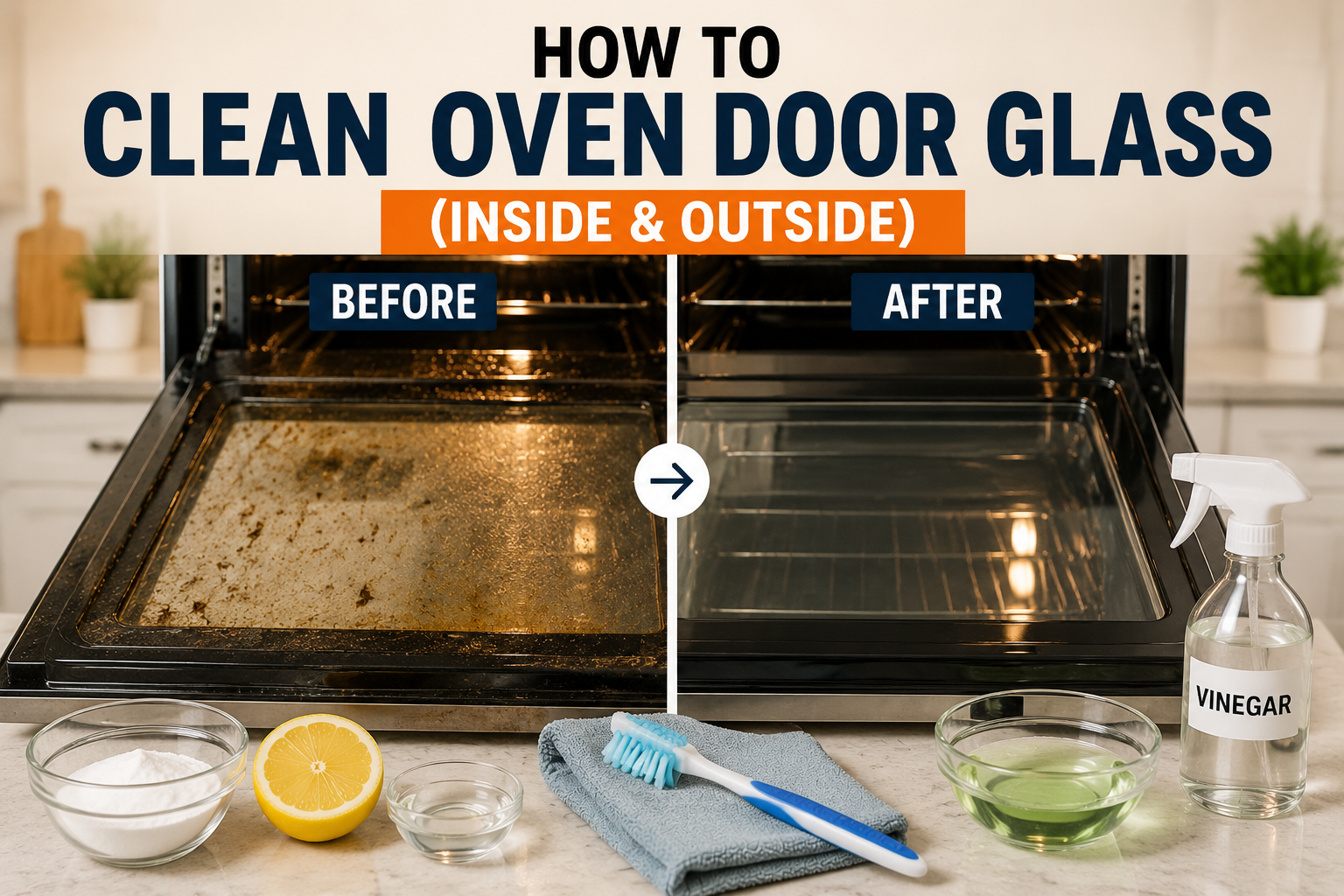
Clean oven door glass is one of the more genuinely tricky parts of oven maintenance. Grease, food splatters, and burnt residue build up on both sides over time, making it look grimy and cutting down visibility while you’re cooking.
Compared to a toaster oven, a full-size oven door has a much bigger glass surface, and it tends to collect heavier, more baked-on grease — especially from roasting and baking. The inside glass is the harder part, since it’s not exactly easy to reach.
Here’s how to clean both sides properly, without damaging the glass.
Why It’s Worth the Effort
- Visibility — a grimy door makes it hard to actually see what’s happening inside while you cook.
- Hygiene — grease and food residue left too long can attract bacteria.
- Appearance — a dirty door makes the whole oven look older and less cared for than it is.
- Cooking performance — heavy buildup can occasionally affect how heat distributes inside.
- Long-term maintenance — cleaning regularly prevents stains from becoming permanent.
Common Problems With Oven Door Glass
- Heavy baked-on grease from roasting and baking splatters — genuinely difficult to remove once it sets.
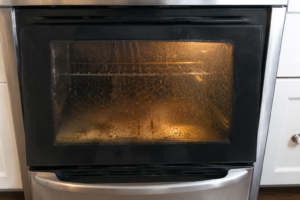
- Cloudy or stained glass, from burnt food residue and grease film.
- Carbon buildup on the inside, from repeated high-temperature cooking — shows up as hard, black stains.
- Fingerprints and smudges outside, simply from frequent use.
- Permanent stains, if buildup is left long enough without attention.
Signs It Needs Cleaning
- Poor visibility inside the oven
- Black or brown burnt marks
- A cloudy or hazy look to the glass
- A strong burnt smell while cooking
- Trouble seeing your food while it bakes
How Often to Clean It
- Heavy baking or roasting: every 2–4 weeks — this one’s essential, not optional.
- Moderate use: every 6–8 weeks.
- Light use: every 2–3 months is usually enough.
What You’ll Need
- Baking soda — a natural abrasive that handles grease and stains well
- White vinegar, to help loosen grease and neutralize odors
- Dish soap for cutting through everyday grease
- An old toothbrush or non-scratch scrubber for tight corners and edges
- Microfiber cloths for wiping and drying
- A razor scraper (optional) for tough, burnt-on residue — more on this below
- A spray bottle for easy application
- Rubber gloves to protect your hands
Step-by-Step Cleaning Guide
- Let the oven cool completely (30–60 minutes). Never clean a hot oven.
- Remove the oven racks and clean them separately — soaking them in hot, soapy water works well.
- Mix baking soda and water into a thick paste, roughly toothpaste consistency.
- Apply the paste generously to the inside glass, covering all the stained areas.
- Let it sit for 15–30 minutes — for heavy buildup, an overnight soak gives noticeably better results.
- Spray white vinegar over the baking soda. It’ll fizz up and start loosening the grease as it reacts.
- Scrub gently with a non-scratch scrubber or toothbrush, focusing on the stubborn spots.
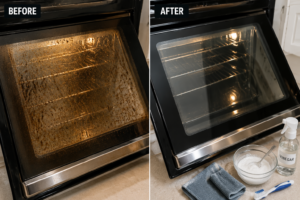
- Wipe clean with a damp microfiber cloth, repeating the process if needed.
- Clean the outside glass with a vinegar-and-water solution and a microfiber cloth for a streak-free finish.
- Dry both sides thoroughly to prevent water spots.
Cleaning the Outside of the Door
- Glass: wipe with a damp microfiber cloth using a vinegar-and-water solution.
- Stubborn stains: a baking soda paste left on for 5–10 minutes handles most of these.
- Edges and corners: an old toothbrush works well for the frame details.
- Handle: a damp cloth, with a touch of dish soap if it’s particularly greasy.
Best Natural Cleaners for This Job
- Baking soda + vinegar — very effective on heavy, baked-on grease, used as a paste-and-spray combo.
- White vinegar alone — good for general grease loosening, sprayed directly or mixed with baking soda.
- Dish soap — reliable for everyday grease and general cleaning.
- Lemon juice — best mixed with baking soda for light stains and a fresher smell.
Mistakes to Avoid
- Cleaning a hot oven — risks burns and won’t clean effectively anyway. Always wait until it’s fully cool.
- Using abrasive scrubbers on the glass — this scratches the surface. Stick to a non-scratch scrubber or soft cloth.
- Reaching for harsh oven cleaners on the glass — these can damage it or leave residue behind. Baking soda and vinegar hold up just as well.
- Not letting the paste sit long enough — the grease needs that 15–30 minutes to actually loosen properly.
- Ignoring the edges and corners — dirt hides there more than people expect. An old toothbrush handles it easily.
Preventing Heavy Buildup
- Wipe up spills as they happen, before they get the chance to bake onto the glass.
- Use oven liners or foil when baking, where it makes sense to.
- Clean regularly — every 4–6 weeks keeps buildup from ever becoming a real project.
- When possible, avoid cooking especially messy foods right up against the door.
Frequently Asked Questions
How do I clean the inside glass without removing the door? The baking soda and vinegar paste method works well — apply generously, let it sit, then scrub and wipe. For heavy buildup, you may need to repeat it once or twice.
Can I remove the oven door to clean it? Many ovens allow this, and it does make cleaning easier. Check your oven’s manual for the safe way to remove and reattach it, since the process varies by model.
Is it safe to use a razor scraper on the glass? It can work on the inside glass at a very shallow angle, but treat this as a last resort rather than a default. Some ovens have a layered or coated glass where a blade can scratch the inner surface, so check your manufacturer’s manual first to confirm it’s safe for your specific model before trying it. When in doubt, stick with the baking soda and vinegar method instead — it’s slower, but it won’t risk the glass.
What about ovens with a self-cleaning function? You can still use the baking soda method on the door glass specifically. The self-clean cycle handles the interior enamel well, but it typically doesn’t fully clean the glass window itself.
Why does the glass still look cloudy after cleaning? Usually a thin leftover layer of grease. Repeat the baking soda and vinegar process and make sure you’re wiping thoroughly at the end.
Can I use commercial oven cleaners on the glass? It’s better to avoid them there — they can be too harsh and sometimes leave residue. Baking soda and vinegar are safer and work just as well.
How do I clean the rubber seal around the door? Gently, with a damp cloth and mild dish soap. Skip harsh chemicals here, since they can degrade the seal material over time.
Final Thoughts
Cleaning the oven door glass — inside and outside both — genuinely improves visibility, keeps things hygienic, and makes the whole oven look newer than it is. It takes a bit of patience, but baking soda and vinegar consistently deliver good results without harsh chemicals.
Stay on top of it regularly, and future cleanings get noticeably easier every time.
I tested the baking soda and vinegar method on several ovens, and it consistently gave the best results for baked-on grease on both sides of the door glass.
About the Author KitchenBite Team — we create practical, tested kitchen cleaning guides using safe and natural methods.
Last updated: July 13, 2026
Disclaimer: The cleaning methods in this article are for informational purposes only. Always follow your oven manufacturer’s care instructions. We’re not responsible for any damage caused by using these methods — use at your own risk.