
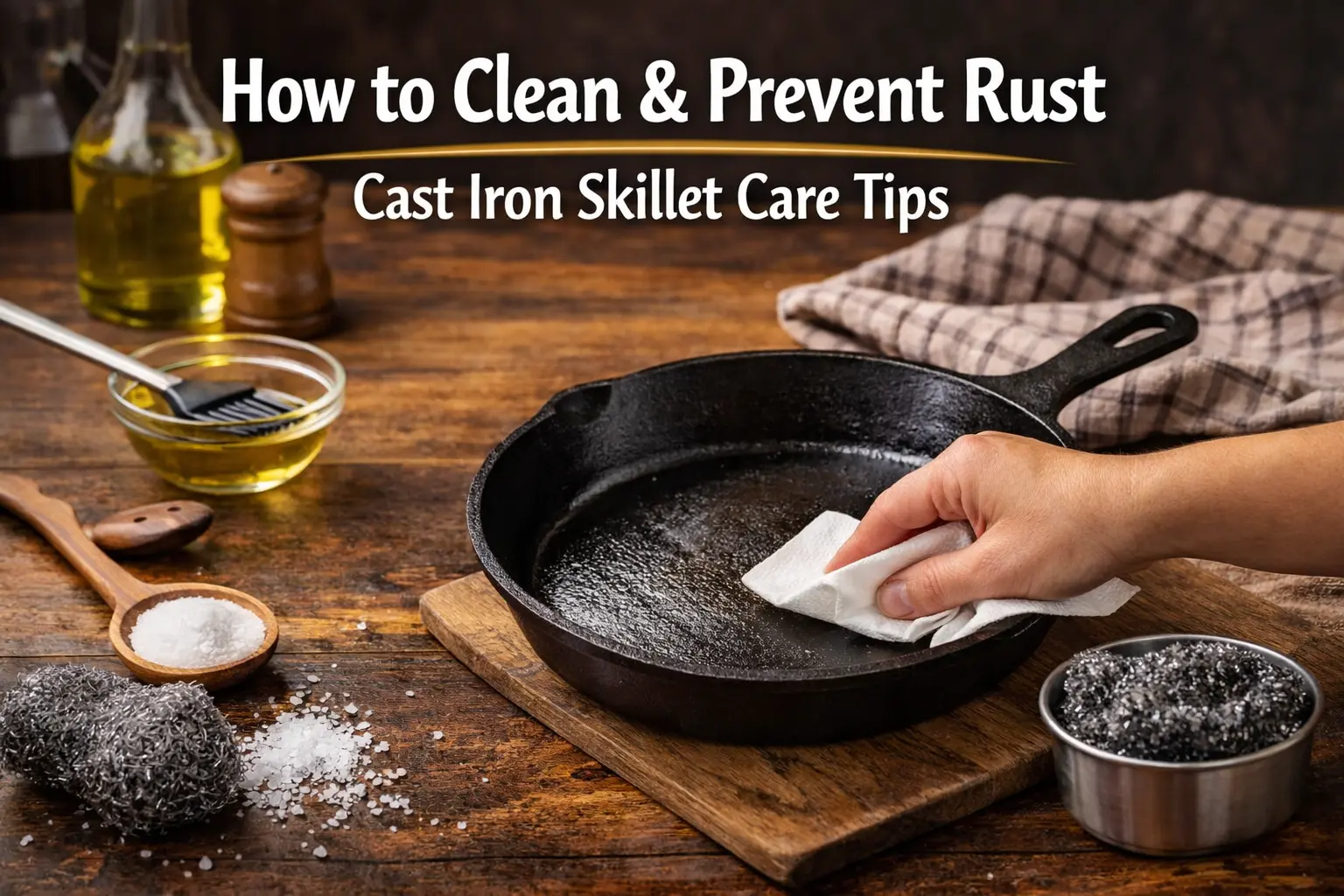
How to Clean a Cast Iron Skillet and Prevent Rust
A cast iron skillet is one of the most useful pans you can own. It holds heat well, cooks food evenly, and can last for years. But if you clean it the wrong way or leave it wet, rust can show up fast.
The good news is that cast iron is not hard to care for. Once you know the basics, the whole process becomes simple. In this guide, you’ll learn how to clean a cast iron skillet, how to remove rust, and how to keep your pan in great shape for the long run.
Quick Summary
- Clean your skillet soon after cooking
- Use warm water and gentle scrubbing
- Dry it fully every time
- Add a very thin layer of oil after cleaning
- Remove rust early before it spreads
- Re-season the pan if needed
- Never leave cast iron soaking in water
Why Cast Iron Needs Special Care
Cast iron is different from most other pans. It does not have a permanent nonstick coating. Instead, it builds a protective layer over time. That layer is called seasoning.
Seasoning is a thin coating of oil that bonds to the pan when heated. It helps protect the iron and makes cooking easier. If that coating gets weak and water sits on the metal, rust can form.
Think of seasoning like a shield. If the shield stays strong, your skillet stays protected. If the shield wears down and moisture gets in, rust starts to grow.
What You Need to Clean a Cast Iron Skillet
You do not need expensive tools. Most of the time, simple kitchen items work just fine.
Basic cleaning tools
- Warm water
- Paper towels or a clean kitchen towel
- Soft sponge or scrub brush
- Kosher salt for stuck-on food
- Neutral oil such as canola, vegetable, or grapeseed oil
For rust removal
- Steel wool or a firm scrub pad
- Extra paper towels
- An oven for re-seasoning
How to Clean a Cast Iron Skillet After Everyday Cooking
Daily care is the easiest way to stop rust before it starts.
1. Let the skillet cool slightly
Do not wash the pan while it is extremely hot. Let it cool for a few minutes, but try to clean it while it is still a little warm.
2. Wipe out food and grease
Use a paper towel or cloth to remove leftover food and excess oil.
3. Rinse with warm water
Run warm water over the skillet and scrub gently with a sponge or brush.
4. Remove stuck-on bits
If food is stuck, try one of these simple methods:
- Scrub with kosher salt
- Add a little warm water and loosen the food gently
- Use a chainmail scrubber if you have one
5. Use a little soap only if needed
A small amount of mild dish soap is usually fine for a well-seasoned pan. What really causes problems is soaking the skillet or leaving it wet for too long.
6. Dry the skillet right away
Wipe the pan dry with a towel as soon as you finish washing it.
7. Heat-dry it on the stove
Place the skillet on low heat for 1 to 2 minutes. This helps remove hidden moisture that a towel can miss.
8. Add a very thin layer of oil
Rub a small amount of oil over the pan, then wipe off the extra. The skillet should look lightly coated, not greasy.
How to Remove Rust From a Cast Iron Skillet
Rust can look scary, but it usually does not mean the pan is ruined. In most cases, you can fix it at home.
Signs of light rust
- Small orange spots
- Rust around the edge
- A rough patch in one area
Signs of heavy rust
- Large rusty areas
- Rough texture across the pan
- Flaking or bare metal
- Rust inside and outside the skillet
How to Remove Light Rust
If the rust is mild, follow these steps:
1. Scrub the rusty area
Use steel wool, a scrub pad, or coarse salt to scrub away the rust.
2. Rinse quickly
Rinse the skillet with warm water.
3. Dry it fully
Wipe it dry and place it on low heat for a minute or two.
4. Add a thin layer of oil
Rub on a small amount of oil and wipe away the extra.
5. Re-season if needed
If rust removed part of the seasoning, do a full oven seasoning cycle.
How to Fix Heavy Rust on a Cast Iron Pan
If the pan has a lot of rust, you may need to restore it more fully.
1. Scrub off as much rust as possible
Use steel wool and keep scrubbing until most of the rust is gone.
2. Wash and dry the skillet
Rinse the pan, wipe it dry, and heat-dry it on the stove.
3. Coat it lightly with oil
Rub oil over the entire pan, inside and outside.
4. Wipe off the excess
This is important. Too much oil can leave the pan sticky.
5. Bake the skillet
Place the skillet upside down in the oven. Put foil or a baking sheet on the lower rack to catch any drips.
Bake at 450°F for 1 hour.
6. Let it cool slowly
Turn off the oven and let the skillet cool inside.
7. Repeat if needed
If the pan still looks patchy, repeat the process once more.
How to Season a Cast Iron Skillet the Right Way
Seasoning helps protect the skillet and makes it better to cook with over time.
Best oil for cast iron seasoning
You do not need a fancy product. Good options include:
- Canola oil
- Vegetable oil
- Grapeseed oil
- Avocado oil
The most important thing is to use a very thin layer.
Step-by-step seasoning method
- Clean and dry the skillet fully
- Rub a very thin coat of oil over the whole pan
- Wipe off all extra oil
- Place the skillet upside down in the oven
- Bake at 450°F for 1 hour
- Let it cool before using it
A thick layer of oil does not create better seasoning. It usually creates a sticky surface instead.
How to Prevent Rust on Cast Iron
Preventing rust is much easier than fixing it later.
Dry the skillet every time
This is the most important habit. Even a small amount of water can cause rust if it sits too long.
Heat-dry after washing
A towel helps, but heat-drying works better because it removes hidden moisture.
Oil it lightly after cleaning
A very thin layer of oil helps protect the surface between uses.
Store it in a dry place
Do not put the skillet away while it is still damp. Make sure it is fully dry before storing it.
Use a paper towel if stacking pans
If you stack your cookware, place a paper towel between pans to protect the surface and help absorb moisture.
Fix small rust spots early
A tiny orange spot is much easier to deal with than a pan full of rust.
Common Mistakes to Avoid
Leaving the pan wet
This is the fastest way to invite rust.
Soaking cast iron in water
Cast iron should not sit in water for long periods.
Using too much oil
Too much oil can leave the skillet sticky and uneven.
Storing it while damp
Even a little moisture trapped in a cabinet can cause problems.
Thinking rust means the pan is ruined
Most cast iron skillets can be restored, even if they look rough at first.
Cast Iron Skillet Care Checklist
Use this simple checklist after each use:
- Wipe out food and grease
- Rinse with warm water
- Scrub gently if needed
- Dry with a towel
- Heat-dry on low for 1 to 2 minutes
- Wipe on a thin layer of oil
- Store in a dry place
A Simple Way to Think About It
A cast iron skillet is a lot like a good pair of leather boots.
If the boots get wet and stay wet, they start to wear down. But if you dry them and care for them, they last a long time.
Cast iron works the same way. Water is the main problem. Quick cleaning, full drying, and light oiling are the simple fix.
Frequently Asked Questions
Can you use soap on a cast iron skillet?
Yes, a small amount of mild soap is usually fine. Just do not soak the pan, and always dry it well afterward.
Can a rusty cast iron skillet be saved?
Yes. In most cases, rust can be scrubbed off and the skillet can be re-seasoned.
How often should I season my cast iron skillet?
You do not need to fully season it after every use. If the pan looks dull, dry, or patchy, it may be time.
What causes rust on cast iron?
Rust usually forms when moisture sits on exposed metal for too long. Poor drying and damp storage are common causes.
Can I put cast iron in the dishwasher?
No. The dishwasher can strip the seasoning and leave the pan too wet.
What oil is best for cast iron seasoning?
Canola, vegetable, grapeseed, and avocado oil are all good choices. The thinness of the oil layer matters more than the exact oil.
How do I clean stuck-on food from cast iron?
Use warm water, kosher salt, or a gentle scrubber. For stubborn bits, add a little water and loosen the food gently.
Should I oil cast iron after every use?
A light wipe of oil after cleaning is a good habit. It helps protect the surface and maintain the seasoning.
Why is my cast iron sticky after seasoning?
You likely used too much oil. Wipe the pan until it looks almost dry before baking it.
How should I store a cast iron skillet?
Store it in a dry place. If you stack pans, place a paper towel between them.
Final Thoughts
A cast iron skillet is one of those kitchen tools that gets better with time. The more you care for it, the better it cooks. The routine is simple: clean it soon after cooking, dry it fully, and use a light coat of oil to protect it.
If you notice rust, do not panic. Most of the time, you can fix it at home and keep using the pan for years.
A few small habits make all the difference. And once those habits become part of your routine, cast iron care feels easy.