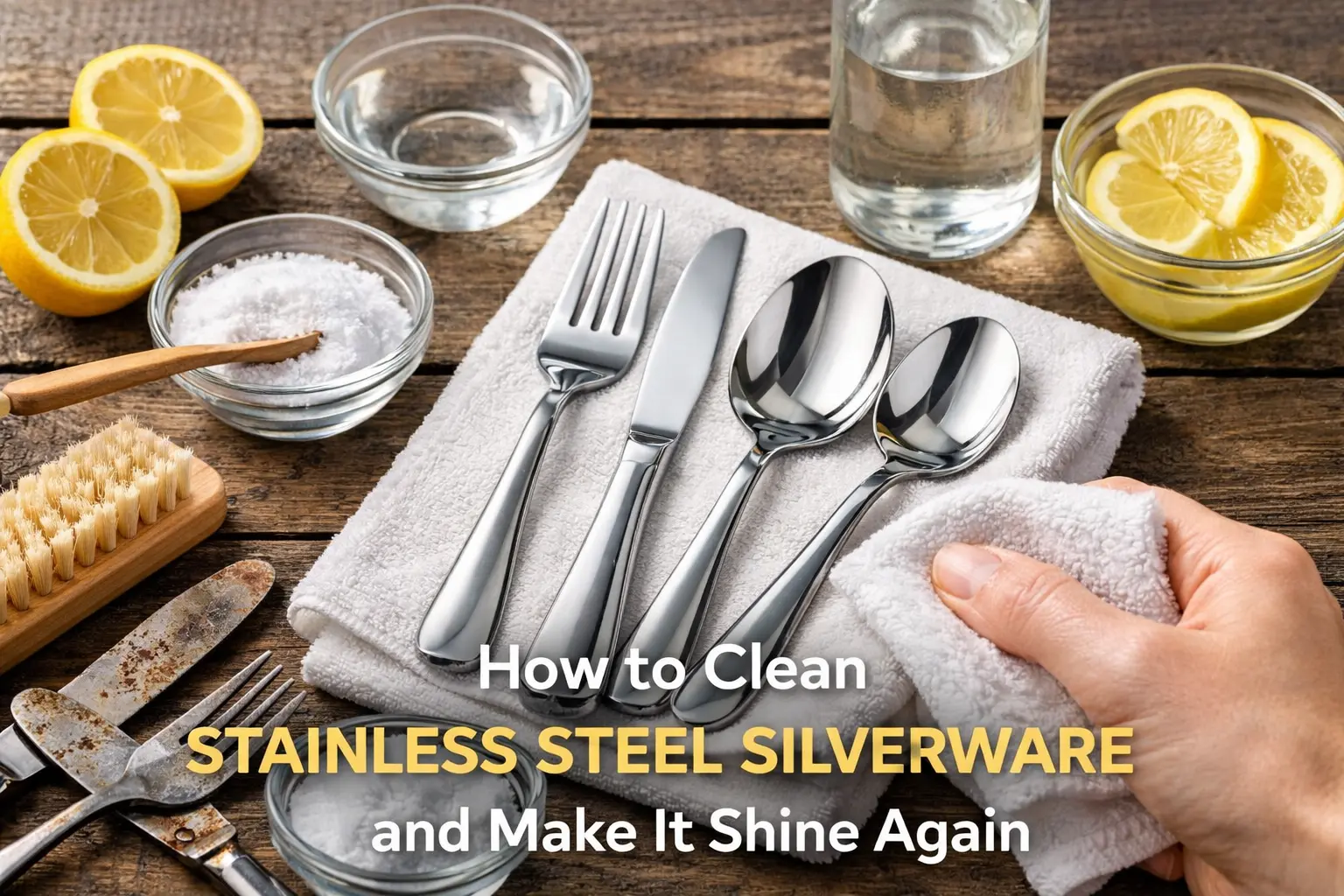
How to Clean Stainless Steel Silverware and Make It Shine Again
Stainless steel silverware can start to look dull, cloudy, or spotted after regular use. In most cases, the surface is not ruined. It usually just has a layer of water spots, detergent film, grease, or food residue that takes away the shine.
The good news is that you can often make stainless steel silverware look bright again with simple items at home. White vinegar, lemon, warm water, and baking soda can all help when they are used the right way. The safest method is gentle cleaning, careful rinsing, and drying right away.
This guide explains how to clean stainless steel silverware step by step, how to remove rust spots, how to make silverware shine again, and which cleaning mistakes to avoid.
Quick Summry
Stainless steel silverware often looks dull because of residue, not damage.
Vinegar works well for water spots and dull film.
Lemon should only be used lightly on stubborn marks.
Baking soda is often better for rust spots.
Drying right away helps prevent new spots and streaks.
Soft cloths are safer than rough scrubbers.
Why Stainless Steel Silverware Loses Its Shine
Stainless steel is strong and long-lasting, but it still shows buildup over time. Hard water can leave mineral spots. Dish soap and dishwasher detergent can leave a cloudy film. Food acids, grease, and fingerprints can also sit on the surface and make silverware look dull.
That is why a fork or spoon may look dirty even after washing. The steel itself is usually fine. The problem is the thin layer on top of it.
Think of it like a glass window. The glass may still be clear, but once dust or film covers the surface, it no longer looks bright. Stainless steel silverware works the same way.
Is Vinegar Safe for Stainless Steel Silverware?
Yes, vinegar can help clean stainless steel silverware when it is used the right way.
White vinegar is good for breaking down dull film, fingerprints, and light water spots. It can make flatware look cleaner and brighter without heavy scrubbing. But vinegar is acidic, so it should not be left on the surface for too long.
Best way to use vinegar
put a little white vinegar on a soft cloth
wipe the silverware gently
rinse it well after cleaning
dry it right away
Avoid this mistake
Do not soak stainless steel silverware in vinegar for a long time. A quick wipe is safer than a long soak.
Is Lemon Safe for Stainless Steel Cutlery?
Lemon can help brighten stubborn dull spots, but it needs more care than vinegar.
Because lemon juice is acidic, it should only be used in small amounts and for a short time. It is better as a spot treatment than an everyday cleaner for a full set of silverware.
When lemon helps
cloudy marks on one spoon or fork
light surface residue
minor dullness that remains after washing
How to use lemon safely
put a small amount of lemon juice on a soft cloth
rub only the problem area
rinse the piece quickly
dry it fully
Do not soak silverware in lemon juice.
Why Knives Sometimes Rust Faster Than Forks and Spoons
Many people notice that only the knives in a silverware set get rust spots. This happens because knife blades are often made differently from forks and spoons.
Knives may be made from a type of stainless steel that holds a sharp edge better but is slightly more likely to show rust if left damp. Rust can also form faster when knives sit in moisture, stay in the dishwasher too long, or come into contact with salty or acidic food.
Common reasons knives rust
trapped moisture
dishwasher humidity
food left on the blade
poor drying habits
rubbing against other metal items
That is why hand drying knives can make a big difference.
What You Need Before You Start
You do not need expensive products. Most people already have what they need at home.
Supplies
warm water
mild dish soap
white vinegar
lemon juice
baking soda
a soft sponge
a microfiber cloth or soft towel
Best tools to use
A soft microfiber cloth works best because it helps clean and polish without scratching the surface.
Avoid using
steel wool
rough scrubbers
harsh abrasive pads
strong chemical cleaners not made for kitchen use
How to Clean Stainless Steel Silverware Step by Step
Step 1: Wash With Mild Soap First
Start with warm water and a small amount of mild dish soap. Wash each piece gently with a soft sponge.
This removes grease, food, and surface buildup first. If you skip this step, you may only spread the residue around instead of removing it.
Rinse the silverware after washing.
Step 2: Use Vinegar for Dull Film and Water Spots
Take a soft cloth and dampen it with white vinegar. Wipe each piece of silverware gently. Pay special attention to cloudy areas, fingerprints, and water spots.
If you want a lighter solution, you can mix vinegar with a little water first.
This step helps with
dull film
cloudy flatware
light hard water marks
fingerprints
Do not leave vinegar sitting on the metal for too long.
Step 3: Use Lemon Only on Stubborn Marks
If a few pieces still look cloudy, use a little lemon juice on a cloth and rub only the dull area.
This can help brighten the finish, but lemon should only stay on the surface briefly. Rinse the piece as soon as you finish.
Lemon works best for
stubborn cloudy spots
light surface stains
small problem areas
Step 4: Use Baking Soda for Rust Spots
If you see orange-brown rust spots, baking soda is often the better choice.
Mix a small amount of baking soda with water until it forms a soft paste. Rub it gently on the rust spot with a cloth or soft sponge. Then rinse the piece well.
Baking soda is useful for
small rust spots
tougher marks
stain removal without harsh scrubbing
If the rust is deep or keeps returning, that piece may need stronger treatment or replacement.
Step 5: Rinse Thoroughly
Rinse every piece of silverware well after cleaning.
This is an important step because leftover vinegar, lemon juice, baking soda, or soap can leave streaks or spots behind. A full rinse gives the surface a clean finish before drying.
Step 6: Dry and Buff Right Away
Dry each piece with a microfiber cloth or soft towel as soon as you finish rinsing.
This helps stop new water spots from forming and brings back the shine. For extra brightness, buff the silverware lightly with a dry microfiber cloth after drying.
Why this step matters
prevents water spots
improves shine
reduces streaks
keeps silverware looking polished
Vinegar vs Lemon vs Baking Soda
Each cleaner has a different job. The best method depends on the problem.
Vinegar
Best for:
dull film
fingerprints
water spots
Lemon
Best for:
stubborn cloudy marks
small dull areas
Baking Soda
Best for:
rust spots
tougher stains
deeper marks
The smartest way to clean silverware is not to use one ingredient for everything. It is to match the cleaner to the problem.
Dishwasher Mistakes That Make Silverware Dull
A dishwasher can save time, but it can also cause spotting and dullness if silverware is not handled properly.
Common dishwasher mistakes
overcrowding the basket
leaving silverware damp after the cycle
washing silverware with food still stuck on it
using too much detergent
letting silverware sit in the closed dishwasher too long
Better dishwasher habits
rinse off salty or acidic food first
do not overload the cutlery basket
remove silverware soon after the cycle ends
dry pieces by hand if needed
These small habits can help prevent dullness and rust spots.
Common Mistakes to Avoid
Using rough scrubbers
Rough scrubbers can scratch stainless steel and make it harder to keep shiny later.
Soaking in vinegar too long
A quick wipe is better than a long soak.
Leaving lemon juice on the surface
Lemon should only be used briefly and rinsed off quickly.
Letting silverware air dry
Air drying often leaves water spots and streaks.
Mixing vinegar with bleach
Never mix vinegar with chlorine bleach. That can create dangerous fumes.
Treating stainless steel like real silver
Stainless steel, silver-plated flatware, and sterling silver do not need the same cleaning method.
Quick Checklist for Shiny Stainless Steel Silverware
wash with mild dish soap first
use vinegar for dull film and water spots
use lemon only for stubborn small marks
use baking soda for rust spots
rinse every piece well
dry with a microfiber cloth right away
avoid rough scrubbers
do not leave acidic cleaners on the steel
store silverware fully dry
Best Tips to Keep Stainless Steel Silverware Shiny Longer
Clean soon after use
Do not let food sit on silverware for too long.
Dry after washing
Even clean water can leave spots if it dries on the surface.
Store fully dry flatware
Putting away damp silverware can lead to odor, spots, or rust.
Use gentle cleaning often
Regular light cleaning is better than waiting until heavy buildup forms.
FAQs
Can vinegar clean stainless steel silverware?
Yes. Vinegar can help remove dull film, fingerprints, and water spots when used briefly and rinsed off well.
Can lemon damage stainless steel?
It can if it sits too long or is used too heavily. Lemon should be used lightly and rinsed off quickly.
What is best for rust spots on silverware?
A baking soda paste is often one of the safest home options for small rust spots on stainless steel silverware.
Why does my silverware get cloudy after the dishwasher?
Cloudiness usually comes from mineral deposits, detergent film, or moisture left on the surface after washing.
Should I air dry stainless steel flatware?
Hand drying is usually better because it helps prevent water spots and streaks.
What cloth should I use to polish stainless steel?
A microfiber cloth or another soft cloth is one of the best choices because it helps reduce streaks and lowers the chance of scratches.
Can I use baking soda on stainless steel silverware every day?
It is better for occasional stain or rust treatment, not daily polishing. For regular cleaning, mild soap and vinegar are usually enough.
How often should I polish stainless steel silverware?
Only when needed. Regular washing and drying will keep most silverware looking good without frequent polishing.
Conclusion
If you want to make stainless steel silverware shine again, the best method is simple and gentle. Start with warm soapy water. Use vinegar for dull film and water spots. Use lemon only for small stubborn areas. Use baking soda for rust spots. Then rinse everything well and dry it right away.
That routine is easy, low-cost, and safer than harsh scrubbing or long acidic soaks. When you clean gently and dry properly, your silverware can stay bright and polished for much longer.