How to Remove Oil and Grease Stains From Kitchen Walls and Tiles
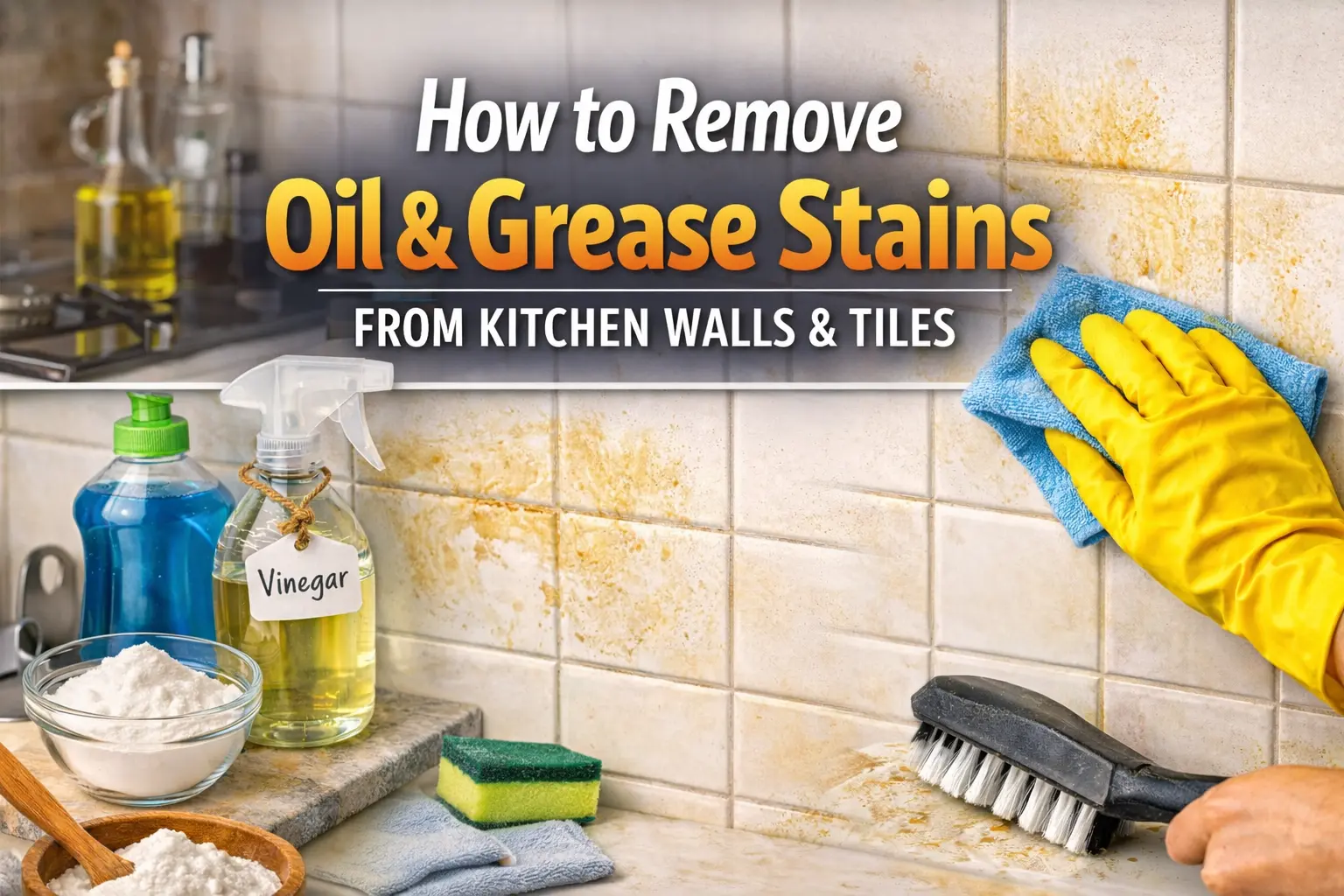
Grease stains on kitchen walls and tiles are common, especially near the stove. They build up slowly, then one day the wall feels sticky and looks dull. The good news is that most grease can be removed with simple cleaning tools you already have at home. In this guide, you will learn what causes grease buildup, how to clean different surfaces safely, which cleaners work best, and how to stop the stains from coming back.
Quick Summary
Start with warm water and a few drops of dish soap.
Use a microfiber cloth or soft sponge, not a rough scrubber.
For stubborn spots, use a baking soda paste.
Vinegar can help on many tiles, but avoid it on natural stone.
Always rinse and dry the surface to prevent streaks.
Clean small grease splashes early so they do not turn into sticky buildup.
Why Kitchen Walls and Tiles Get Greasy
When you cook, tiny drops of oil float into the air. Heat, steam, and smoke push them onto nearby surfaces. That is why the area around the stove, backsplash, and upper wall gets dirty faster than the rest of the kitchen.
Grease is different from normal dust. Dust can often be wiped off with water. Grease sticks to the surface and holds onto more dirt. Over time, it turns into a dull, sticky layer.
Think of it like syrup on a table. A dry cloth will not do much. You need something that can break the sticky layer first.
What You Need Before You Start
You do not need many supplies. Most kitchens already have what is needed.
Basic supplies
Warm water
Dish soap
Microfiber cloths
Soft sponge
Spray bottle
Small bowl
Baking soda
Soft-bristle toothbrush or small cleaning brush
Dry towel
Optional supplies
White vinegar
Commercial degreaser labeled safe for kitchen surfaces
Gloves
Step stool for high areas
Before you clean a large area, test the cleaner on a small hidden spot. This is very important for painted walls, matte finishes, old paint, and delicate tile surfaces.
Know Your Surface Before Cleaning
Not all walls and tiles should be cleaned the same way.
Painted kitchen walls
Use gentle cleaning first. Too much water or strong scrubbing can damage paint. Matte paint can mark more easily than satin or semi-gloss paint.
Ceramic and porcelain kitchen tiles
These are usually easier to clean. Warm soapy water works well for light grease. Baking soda paste can help with thicker buildup.
Grout lines
Grout is more porous than tile. That means it can trap grease faster. It also needs a soft brush to clean inside the lines.
Natural stone tiles
Be careful with vinegar or acidic cleaners. These can dull or damage the surface. Use a pH-neutral cleaner instead.
Step-by-Step: How to Remove Grease Stains From Kitchen Walls and Tiles
Step 1: Dry wipe loose dust first
Use a dry microfiber cloth to wipe off dust, crumbs, or loose dirt.
This small step matters. If you skip it, the dust can mix with water and turn into dirty streaks.
Step 2: Use warm soapy water first
Fill a bowl or spray bottle with warm water and add a few drops of dish soap.
Dip a soft cloth into the solution and wring it out. The cloth should be damp, not dripping.
Wipe the greasy area in small sections. Let the soapy water sit for one to two minutes on tiles. On painted walls, do not let it sit too long.
Then wipe again with gentle pressure.
This is the best first method for anyone searching for how to clean kitchen tiles grease or remove grease stains from kitchen walls. It is simple, cheap, and safe for most surfaces.
Step 3: Use baking soda paste for stubborn grease
If the stain is still there, make a paste with baking soda and a small amount of water.
Spread a thin layer over the greasy patch. Leave it for five to ten minutes. Then rub gently with a soft sponge or cloth.
Baking soda adds mild scrubbing power. It helps lift sticky grease without being as harsh as a strong chemical cleaner.
This works well for:
sticky grease on kitchen tiles
older oil marks
greasy spots around switches, corners, and tile edges
After scrubbing, wipe the area with a clean damp cloth.
Step 4: Use vinegar carefully where appropriate
White vinegar can help cut grease on some tile surfaces. Mix equal parts vinegar and water in a spray bottle.
Spray lightly on ceramic or porcelain tile, wait a minute, then wipe clean.
Do not use vinegar on:
natural stone
marble
unsealed surfaces
some delicate painted walls
If you are trying to clean kitchen wall tiles naturally, this is a useful option for the right surface. Just remember that “natural” does not always mean safe for every material.
Step 5: Clean grout lines and corners
Grease loves to hide in grout and edges.
Use a soft toothbrush or small brush dipped in warm soapy water. Gently scrub the grout lines. For stubborn grease, dip the brush into a little baking soda paste.
Do not scrub too hard. The goal is to lift the dirt, not wear down the grout.
If you have been wondering how to remove grease from grout, this step is often the missing part.
Step 6: Rinse and dry
Once the grease is gone, wipe the area with a clean cloth dampened with plain water.
This removes leftover soap, baking soda, or cleaner. Then dry the surface with a towel or dry microfiber cloth.
This final step helps prevent streaks, cloudy marks, and sticky residue.
Best Cleaner for Greasy Kitchen Tiles and Walls
The best cleaner depends on how bad the grease is.
1. Dish soap and warm water
Best for light to medium grease. This is the safest first choice for most kitchen walls and tiles.
2. Baking soda paste
Best for stubborn patches and sticky buildup. It is helpful when warm soapy water is not enough.
3. Vinegar and water
Best for some ceramic or porcelain tiles. It can help break grease, but it is not right for every surface.
4. Commercial degreaser
Best for heavy, old, or layered grease. Choose one labeled safe for kitchen walls, tile, or painted surfaces. Always read the product instructions.
If you are deciding between a homemade cleaner and a store-bought degreaser for kitchen walls and tiles, start gentle first. Use a stronger product only if the stain stays after basic cleaning.
Common Mistakes to Avoid
Scrubbing too hard
Hard scrubbing can damage paint, scratch tile finish, or wear down grout.
Using too much water on walls
A soaked wall can lead to streaks, soft paint, or damage over time.
Skipping the patch test
Even a common cleaner can react badly on some paints or tile finishes.
Using vinegar on natural stone
Stone can lose its shine or get damaged by acid.
Mixing strong cleaners
Never mix bleach with ammonia, vinegar, or other chemicals. This can create dangerous fumes.
Forgetting to rinse
Leftover cleaner can attract more dirt and make the surface feel sticky again.
Quick Checklist for Fast Cleaning
Dry wipe the area first
Mix warm water with a few drops of dish soap
Wipe in small sections
Use baking soda paste on stubborn spots
Clean grout with a soft brush
Rinse with plain water
Dry with a clean cloth
Turn on the exhaust fan after cooking
How to Prevent Grease Stains From Building Up Again
Cleaning is easier when grease never gets too thick.
Wipe splashes early
A fresh grease spot is much easier to remove than an old one.
Use your exhaust fan or range hood
Better airflow helps reduce grease in the air.
Clean near the stove weekly
You do not need a deep clean every day. A quick wipe once a week makes a big difference.
Use a backsplash if possible
A tile backsplash is easier to clean than plain painted wall.
Keep cloths and cleaners ready
When supplies are easy to reach, small messes get cleaned faster.
Preventing grease stains on kitchen walls is a lot like brushing your teeth. A little care often saves you from a bigger job later.
FAQs
1. What is the best homemade cleaner for greasy kitchen walls?
Warm water with a few drops of dish soap is the best first option. For stubborn spots, add baking soda paste.
2. Can vinegar remove grease from kitchen tiles?
Yes, vinegar can help on ceramic and porcelain tiles. Avoid it on natural stone and test it first on any delicate finish.
3. How do I remove old grease stains from a painted wall?
Start with a damp cloth and dish soap. If needed, use a little baking soda paste very gently. Always patch test first.
4. How do I clean a greasy tile backsplash?
Use warm soapy water, wipe in sections, then rinse and dry. For sticky spots, use baking soda paste.
5. How do I remove grease from grout lines?
Use a soft toothbrush with warm soapy water. Add baking soda paste for tougher buildup.
6. Why do my kitchen walls still feel sticky after cleaning?
There may be leftover cleaner or grease film. Rinse with plain water and dry well.
7. Do I need a commercial degreaser?
Not always. Many light and medium grease stains come off with dish soap and warm water. Use a degreaser for heavy buildup.
8. How often should I clean kitchen wall tiles?
A light wipe every week is usually enough near cooking areas. Deep cleaning can be done as needed.
9. Can I use a rough scrub pad on kitchen tiles?
It is better to use a soft sponge or microfiber cloth. Rough pads can scratch some surfaces.
10. What helps stop grease from coming back?
Use a range hood, wipe fresh splashes quickly, and clean around the stove often.
Conclusion + Next Step
Oil and grease stains on kitchen walls and tiles look hard to remove, but the process is usually simple. Start with warm soapy water, move to baking soda paste for tougher spots, and use stronger cleaners only when needed. The key is to clean gently, know your surface, and always rinse and dry well.
Your next step is easy: pick one greasy area near the stove and clean it today using the basic method. Once you see how well it works, the rest of the kitchen will feel much easier.
Key Takeaways
Dish soap and warm water should be your first cleaning method.
Baking soda paste works well for stubborn and sticky grease.
Vinegar can help on some tiles, but not on natural stone.
Painted walls need less water and gentler scrubbing than tile.
Regular quick wipe-downs stop grease from becoming a deep-cleaning problem.
Glossary
Grease buildup: A sticky layer of oil and dirt that forms over time.
Grout: The material between tiles.
Degreaser: A cleaner made to break down oil and grease.
Patch test: Testing a cleaner on a small hidden area first.
Microfiber cloth: A soft cloth that traps dirt well and reduces streaks.
Porous surface: A surface with tiny openings that absorb liquid more easily.
Backsplash: The wall area behind a stove or sink, often covered with tile.
pH-neutral cleaner: A gentle cleaner that is less likely to damage delicate surfaces.
Answer box
To remove oil and grease stains from kitchen walls and tiles, start with warm water and a few drops of dish soap. Wipe with a soft cloth, then use baking soda paste for stubborn spots. Rinse with clean water and dry well. Avoid harsh scrubbing, and do a patch test on painted walls or delicate surfaces first.