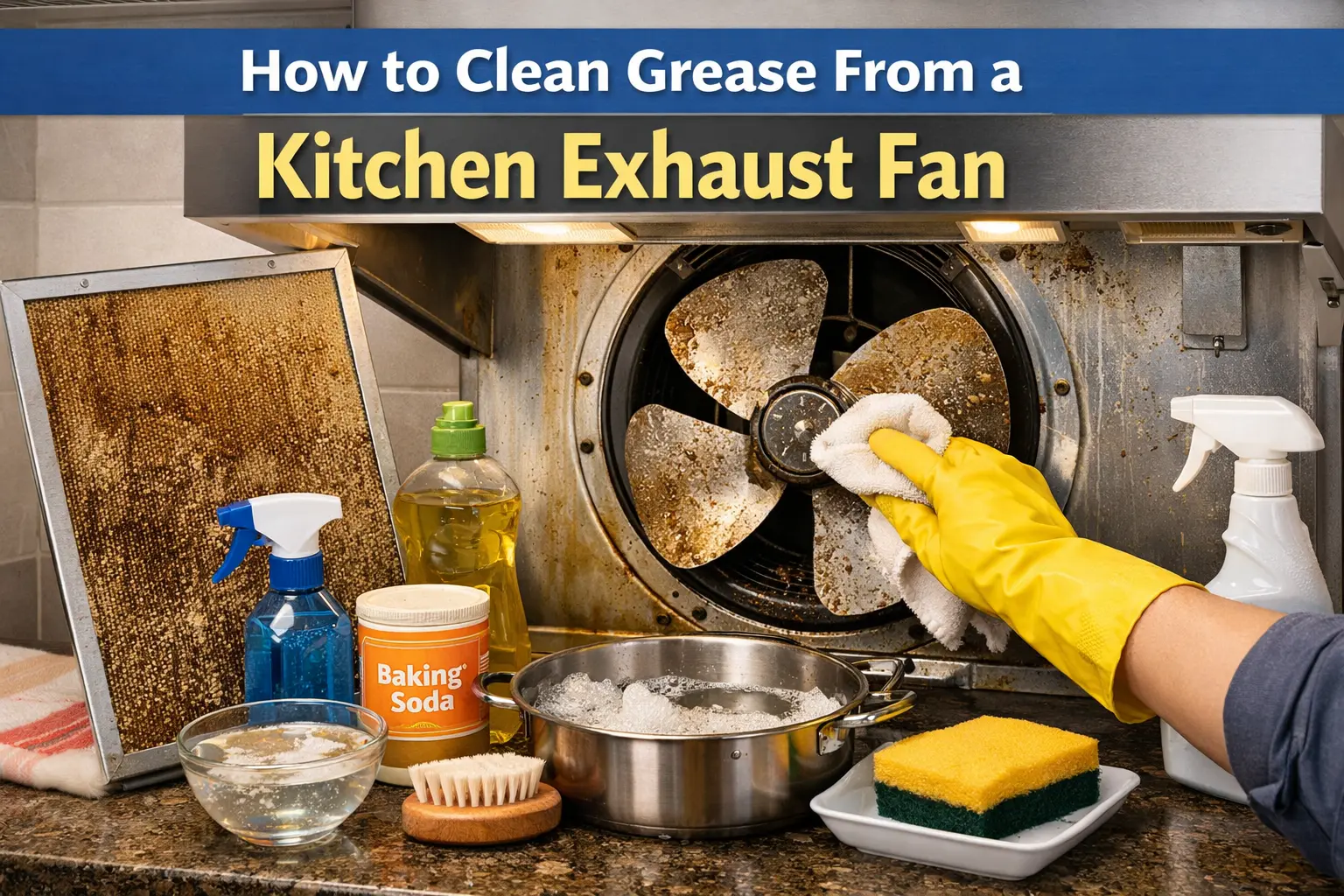
How to Clean Grease From a Kitchen Exhaust Fan
A kitchen exhaust fan pulls out smoke, steam, and cooking smells. Over time, it also catches oil and grease. That greasy layer can make the fan look dirty, smell bad, and work less well. The good news is that you can clean most kitchen exhaust fans at home with simple tools. In this guide, you will learn what causes grease buildup, what supplies to use, how to clean the fan step by step, and how to keep it cleaner for longer.
Quick Summary
Kitchen exhaust fans collect grease from daily cooking, especially frying.
Warm water, dish soap, and a soft cloth work well for light grease.
Removable filters can often be soaked and scrubbed gently.
Do not spray water directly into the motor or electrical parts.
Clean the fan regularly so grease does not become thick and sticky.
What is a kitchen exhaust fan, and why does grease build up?
A kitchen exhaust fan helps move dirty air out of your cooking area. It pulls in smoke, steam, heat, and odors. But it also pulls in tiny drops of oil from the air.
Those oil drops stick to the fan cover, blades, and filter. Dust then sticks to the grease, and the layer becomes thicker. This is why the fan can feel sticky and look dark or yellow over time.
Think of it like steam on a bathroom mirror. At first, it is light and easy to wipe. If you ignore it again and again, it becomes harder to clean. Grease on an exhaust fan works the same way.
Why cleaning your exhaust fan matters
A greasy fan is not just ugly. It can also make your kitchen feel less fresh.
Here is why regular cleaning matters:
Better airflow: Thick grease can block the filter and reduce air movement.
Less odor: Old grease can trap bad smells.
Cleaner kitchen: A dirty fan may spread greasy dust around nearby surfaces.
Easier maintenance: Light cleaning is much easier than a deep clean.
If your kitchen exhaust fan is noisy, smells oily, or looks sticky, it probably needs attention.
Tools and supplies you need before you start
You do not need fancy tools for most exhaust fan cleaning jobs. Basic cleaning items are usually enough.
Basic supplies
Rubber gloves
Warm water
Dish soap
Sponge or soft cloth
Microfiber cloth
Old toothbrush or soft brush
Paper towels
Optional supplies
Baking soda
White vinegar
Mild degreaser
Small bucket or sink for soaking filters
[Assumption: most readers are cleaning a standard home kitchen exhaust fan or range hood filter.]
Try to avoid rough scrubbers or metal wool. These can scratch stainless steel, painted metal, or plastic parts.
Safety steps before cleaning an exhaust fan
Before you start, make safety your first step.
Turn the fan off.
Unplug it if the plug is easy to reach, or switch off power if needed.
Wait until the fan is cool.
Spread paper towels or an old cloth below the fan to catch grease drips.
Never spray lots of liquid into the motor housing. Water and electricity are a bad mix.
Also, if your fan has a light, make sure the bulb area is cool before touching it.
Step-by-step: how to clean grease from a kitchen exhaust fan
This is the main process for cleaning grease from a kitchen exhaust fan.
Step 1: Remove loose dust and surface dirt
Use a dry paper towel or cloth to wipe away loose dust first. This keeps the grease from turning into a muddy mess when you add water.
Step 2: Remove the filter or cover if possible
Many kitchen exhaust fans have a removable mesh filter or front cover. Take it off carefully.
If you are not sure how it opens, look for clips or a sliding edge. Do not force it.
Step 3: Make a simple cleaning solution
Mix warm water with dish soap. This is often enough for light to medium grease.
For heavier buildup, add a little baking soda to make cleaning easier. A mild degreaser can help if the grease is very thick.
Step 4: Clean the removable filter
Place the filter in a sink or bucket of warm soapy water. Let it soak for a while so the grease softens.
Then scrub gently with a soft brush or toothbrush. Pay attention to the corners and edges where grease hides.
Rinse with clean water and leave it to dry fully.
Step 5: Wipe the fan body and outer surfaces
Dip a cloth or sponge into the cleaning solution. Wring it out well so it is damp, not dripping.
Wipe the fan cover, outer housing, and nearby greasy spots. Use small circles on sticky areas. If needed, go over the same spot more than once.
Step 6: Clean the blades carefully
If the blades are easy to reach, wipe them gently with a damp cloth. Hold the blade steady and clean both sides.
Do not bend the blades. Do not let water drip into the motor area.
Step 7: Dry everything well
Use a clean microfiber cloth or paper towel to dry the fan and filter. This step matters. Reassembling wet parts can cause problems.
Step 8: Reassemble the fan
Once all parts are dry, put the filter or cover back in place. Turn the fan on and check that it runs normally.
If the fan still smells bad or runs poorly, the grease may be deeper inside, or the unit may need repair.
How to clean removable mesh or metal filters
A mesh filter is one of the greasiest parts of a kitchen exhaust fan. It catches oil before the air passes through.
Here is the easiest way to clean it:
Remove the filter.
Fill a sink or basin with warm water and dish soap.
Add baking soda if the grease is stubborn.
Soak the filter.
Scrub gently with a soft brush.
Rinse well.
Dry fully before putting it back.
If the mesh is thin, be gentle. Pressing too hard can bend it.
How to clean non-removable parts safely
Some exhaust fan parts do not come off easily. In that case, cleaning should be more careful.
Use a damp cloth, not a dripping sponge.
Wipe one small section at a time.
Use a toothbrush for corners and tight spaces.
Keep liquids away from wires, switches, and the motor housing.
For very sticky grease, hold a warm damp cloth on the spot for a short time. This can soften the buildup and make it easier to wipe away.
Homemade methods vs store-bought degreasers
Many people ask if they can clean an exhaust fan with baking soda or vinegar. The answer is yes, sometimes.
Dish soap
Dish soap is often the best first choice. It is simple, common, and made to cut grease.
Baking soda
Baking soda can help scrub sticky grease gently. It is useful when dish soap alone is not enough.
White vinegar
Vinegar may help with light grime and odor, but it is not always the strongest option for heavy kitchen grease.
Store-bought degreaser
A degreaser may be useful for thick, old grease. But always read the label first. Make sure it is safe for metal, paint, or plastic surfaces.
A simple rule is this: start mild, then go stronger only if needed.
How often should you clean a kitchen exhaust fan?
There is no one perfect schedule for every home. It depends on how often you cook and what you cook.
If you fry food often, grease builds up faster. If you mostly boil or steam food, buildup may be slower.
A good habit is to:
wipe visible grease when you see it
check the filter often
do a deeper clean before the grease becomes thick and sticky
If your fan smells oily, looks dark, or feels sticky, it is time to clean it.
Common mistakes to avoid
Cleaning an exhaust fan is simple, but these mistakes can cause trouble.
1. Using too much water
Too much water near the motor can damage the unit.
2. Spraying cleaner directly into electrical parts
Always spray onto the cloth first if needed.
3. Scrubbing with rough tools
Harsh scrubbers can scratch surfaces and damage finishes.
4. Reassembling parts while wet
Moisture left behind can lead to problems later.
5. Waiting too long
Old grease is harder to remove than fresh grease. Regular cleaning saves time.
Quick checklist for exhaust fan cleaning
Use this simple checklist each time:
Turn off power first
Let the fan cool down
Remove loose dust
Wash removable filters in warm soapy water
Wipe the cover, blades, and outer housing
Keep liquid away from the motor
Dry all parts fully
Reassemble carefully
Test the fan after cleaning
FAQs
1. Can I clean an exhaust fan with vinegar?
Yes, vinegar can help with light grime and odor. For heavy grease, dish soap or a mild degreaser may work better.
2. What is the best way to remove grease from an exhaust fan?
Start with warm soapy water and a soft cloth. For thicker grease, soak removable filters and use baking soda or a gentle degreaser.
3. Can I soak exhaust fan filters in hot water?
Warm or hot water can help loosen grease on many metal filters. Do not soak electrical parts or anything connected to the motor.
4. How do I clean sticky grease that will not come off?
Let the greasy part soak if it is removable. If not, use a warm damp cloth to soften the grease, then wipe and scrub gently.
5. Can baking soda clean exhaust fan grease?
Yes. Baking soda can help loosen sticky grease and add gentle scrubbing power.
6. Should I spray cleaner directly on the fan?
It is safer to spray the cleaner onto a cloth first, especially near electrical parts.
7. Why does my exhaust fan still smell after cleaning?
The smell may be deeper in the filter, vent area, or motor section. In some cases, the fan may need deeper service or repair.
8. How do I know if the filter needs cleaning?
If it looks dark, feels sticky, or blocks airflow, it likely needs cleaning.
9. Can grease make an exhaust fan work poorly?
Yes. Grease buildup can reduce airflow and make the fan less effective.
10. When should I call a professional?
Call a professional if the fan is not working, makes unusual noise, or has grease buildup in areas you cannot safely reach.
11. Is a homemade exhaust fan cleaner enough?
For light to medium grease, yes. For old, heavy buildup, you may need a stronger product made for kitchen grease.
12. Can I use the same method for a range hood?
In many cases, yes. The same basic cleaning steps often work for a range hood filter and outer surface.
Conclusion + next step
Cleaning grease from a kitchen exhaust fan is one of those small jobs that makes a big difference. A clean fan looks better, smells fresher, and can work more smoothly. The best method is simple: start with safety, use warm soapy water, clean removable filters carefully, and keep moisture away from the motor.
Your next step is easy. Check your exhaust fan today. If it feels sticky or looks dark, give it a basic clean before the grease gets worse.
Key Takeaways
Kitchen exhaust fans collect grease from cooking fumes over time.
Light grease often comes off with warm water and dish soap.
Removable mesh filters should be soaked, scrubbed gently, rinsed, and dried.
Never let too much liquid reach the motor or electrical parts.
Regular cleaning is easier and safer than waiting for heavy buildup.
Glossary
Exhaust fan: A fan that removes smoke, steam, heat, and odors from the kitchen.
Grease buildup: Sticky oil and dirt that collect on surfaces over time.
Mesh filter: A metal screen that catches grease before air passes through.
Degreaser: A cleaning product made to break down oily residue.
Motor housing: The part of the fan that covers and protects the motor.
Airflow: The movement of air through the fan.
Removable filter: A filter that can be taken out for soaking and washing.
Non-abrasive cloth: A soft cloth that will not scratch surfaces.
Answer box
To clean grease from a kitchen exhaust fan, turn off the power, remove the filter if possible, soak it in warm soapy water, and scrub gently. Wipe the fan cover and blades with a damp cloth, keep water away from the motor, dry all parts fully, and reassemble the fan.